For seven years, I allowed the world to believe I was a man without weakness. My name is Cassian Blackthorn, Duke of Ravenshire, and I built my reputation on control. In the eyes of the aristocracy, I was not a man who reacted. I was a man who calculated. I dismantled rival houses, defeated political opponents, and destroyed anyone foolish enough to underestimate me. People believed nothing could shake me because I never allowed anyone to see what existed beneath the surface. But they never knew the truth. Behind the power, behind the reputation, behind the carefully constructed image of a man who feared nothing, there was a wound I carried every day. Seven years earlier, the woman I loved disappeared, and I was forced to believe that she had chosen to leave me. Her name was Seraphine. She was the only person who had ever made me feel like I was more than my title. When she vanished, I did what I had always done. I buried the pain, built stronger walls, and turned myself into someone even more untouchable. I believed she had abandoned me. I believed I had lost everything because she chose another path. I never imagined that the truth was far more devastating.
The morning of the winter assembly at Castlemont Palace began like every other important day of my life. I dismissed political delegations, reviewed proposals, and handled negotiations with the same cold precision people had come to expect from me. My steward Hale informed me of parliamentary movements, new alliances, and Lord Chancellor Graves requesting a private meeting. Everything was predictable. Everything was controlled. Yet beneath all of it, one thought continued returning to me: seven years since Seraphine. I never spoke her name. I never allowed anyone to ask about her. But memories have a way of surviving even when you try to bury them. I remembered the night she disappeared, the confusion, the anger, and the letter that supposedly came from her explaining why she could no longer remain. I remembered reading those words over and over, trying to understand how the woman who had once looked at me like I was the only person in the world could leave without saying goodbye. I convinced myself that accepting the loss was strength. I did not understand that I was simply carrying a lie.

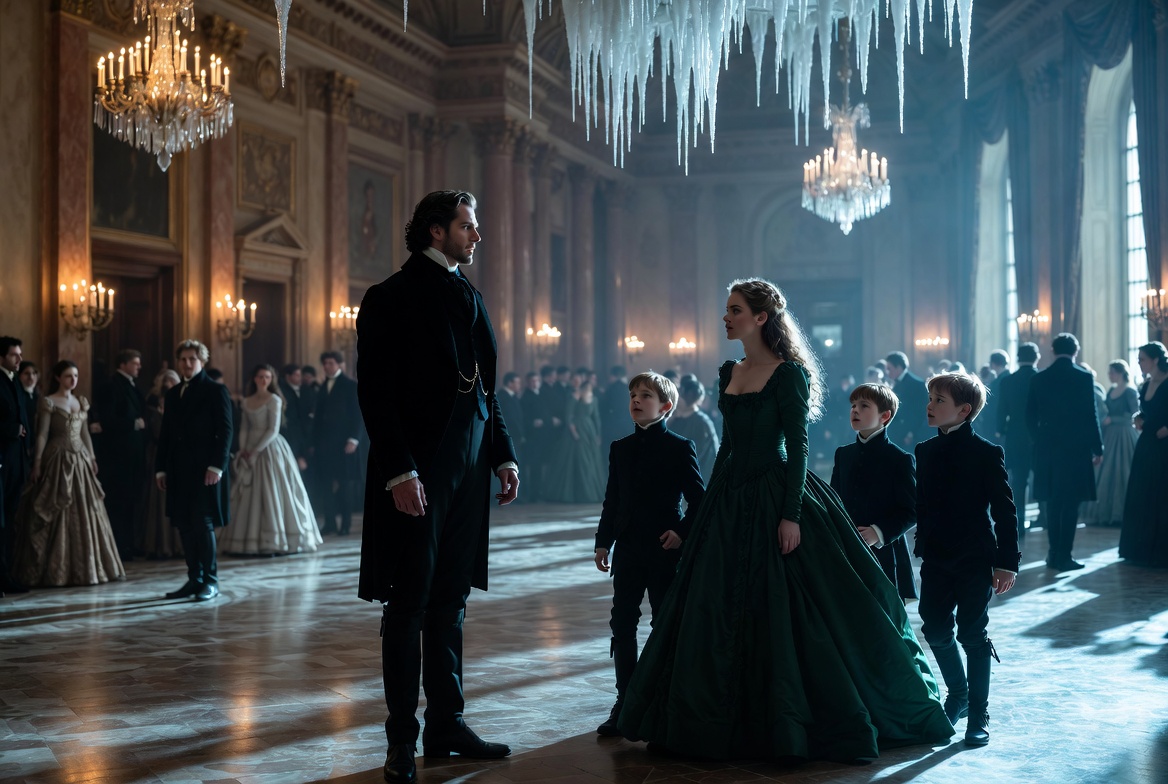
The winter assembly at Castlemont Palace was the most important social event of the year. Every powerful family attended because alliances were created and destroyed behind polite smiles and elegant conversations. I arrived late because I had always understood the value of timing. Entering early showed eagerness. Arriving exactly on time showed respect. Arriving late reminded everyone that they were waiting for you. I entered the ballroom wearing black, as always, surrounded by hundreds of people who watched every movement I made. Then everything changed. The doors opened, and a woman entered wearing a dark green dress. At first, I barely noticed her. She had no extravagant jewelry, no desire to attract attention, and no reason for someone like me to focus on her. But something about the way she moved stopped me. My body recognized her before my mind accepted it. Seven years disappeared in a single second.
Seraphine.
She was alive.
But she was not alone.
Behind her stood three boys. Three children with the same storm-gray eyes I saw every morning when I looked in the mirror. The first was serious, watching the room with a level of awareness that did not belong to a child. The second stood with his shoulders squared and his jaw set, carrying himself like someone who had already decided he would protect the people around him. The third stayed close to his mother, softer and gentler, looking at the world with curiosity instead of suspicion. I knew before anyone told me. I knew before logic could explain it. Those were my sons. My hands, which had remained steady through wars of politics and power, began to tremble. For seven years, I believed I had lost a woman. In that moment, I discovered I had lost an entire family. The most painful realization was not simply that they existed. It was that they had lived without me because someone had decided I did not deserve to know.
I watched Seraphine carefully. She had changed. The woman I remembered was still there, but life had carved deeper lines into her face. She carried herself differently. Stronger. More guarded. She had survived something. When our eyes met across the ballroom, I saw fear in her expression. Not fear of the Duke of Ravenshire. Fear of me as the man she believed had destroyed her life. That realization hurt more than any accusation. She thought I had sent her away. She thought I had taken everything from her. Before I could reach her, Hale returned with information that changed everything. The person behind the deception was Malcolm Voss, my closest advisor, my trusted counselor, and the man who had personally investigated Seraphine’s disappearance. He was the person who delivered the evidence that convinced me she had left willingly. He was the person I trusted most. He had forged documents, manipulated witnesses, and created an entire false story while standing beside me for seven years pretending to help me find answers.
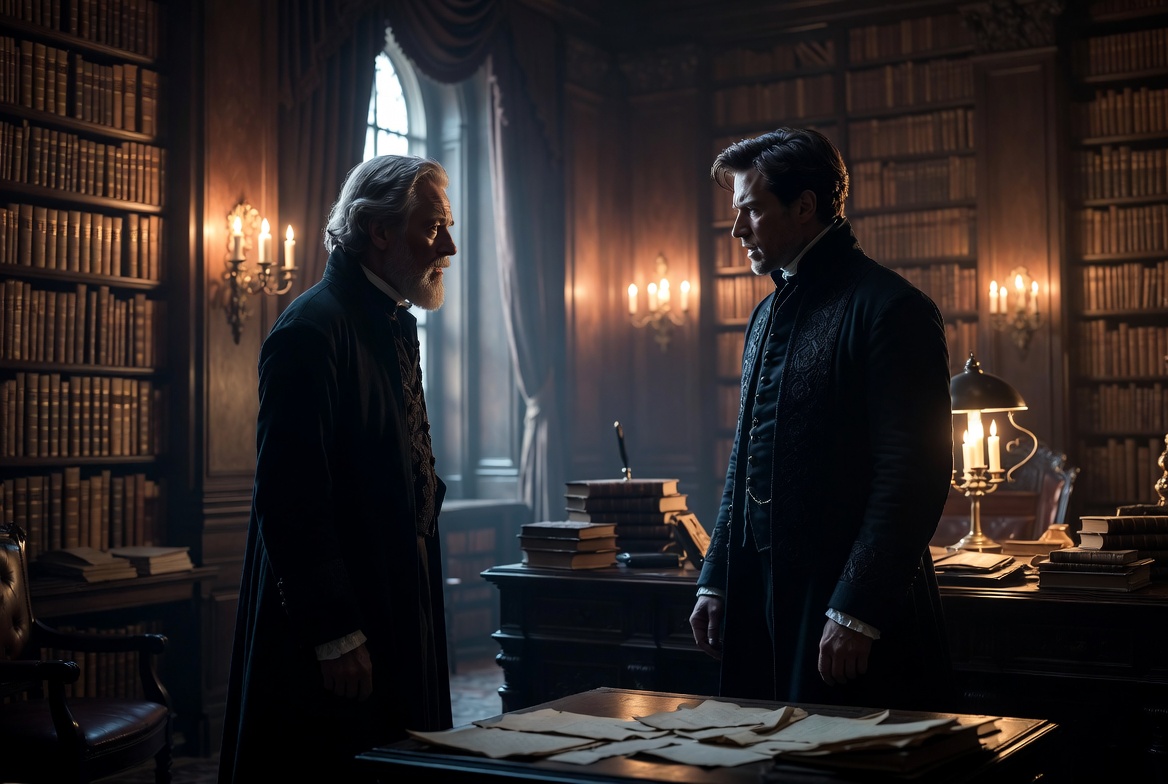
I met Seraphine privately in the library before confronting Voss. She entered expecting punishment. She believed I had brought her there to destroy her. When I told her the truth, that I had never sent her away, that I never wrote the letter, that I never ordered her exile, I watched years of pain collide with a reality she had never considered. Malcolm Voss had not only stolen my family. He had used my reputation against me. He knew exactly what Seraphine would fear and exactly what I would believe. He told her I would destroy her if she stayed. He told me she abandoned me. He built a perfect lie because he understood both of us. Then he entered the library and admitted everything. He claimed he had protected the Duchy. He said Seraphine was a weakness, that my love for her would have destroyed my political future, and that removing her was the only logical decision. To him, my children were not children. They were risks. Variables. Problems to eliminate. That was the moment I understood the difference between power and humanity. Malcolm believed control was everything. He forgot that some things are worth losing everything to protect.
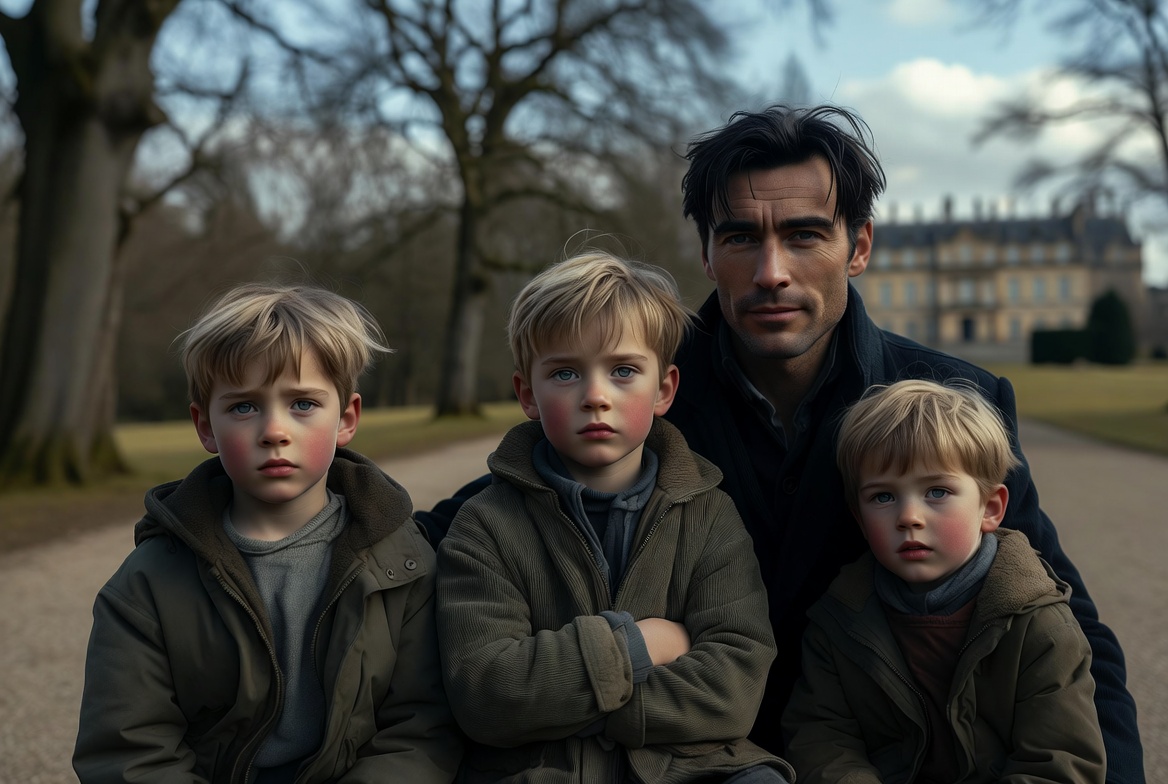
Voss threatened to destroy the Duchy if I moved against him. He had spent years creating financial networks, political alliances, and secret arrangements that made him believe he was untouchable. He asked me one question: “What are you willing to lose?” The old version of me would have protected the institution first. I would have calculated the damage, searched for the safest solution, and sacrificed whatever was necessary to preserve power. But I was no longer that man. I had spent seven years believing I had nothing left to lose. Then I found three boys who carried my blood and a woman who had survived because I failed to find the truth. “Everything,” I told him. I was willing to lose everything. My title. My reputation. My political influence. None of it mattered compared to them. I exposed Voss’s crimes, warned the families he had manipulated, and began dismantling the system he had built. It was dangerous. It was costly. But for the first time in years, I was fighting for something real.
The rebuilding took time. I did not walk into my sons’ lives and demand to be called father. I had already learned the damage caused by forcing control onto others. Instead, I showed up. Every week. Every visit. I sat with them and allowed them to decide whether they trusted me. William, the oldest, was the first to approach me. He asked questions about engineering and how things worked. Thomas, the strongest and most guarded, watched me the longest. He needed proof, not promises. One day he finally stood in front of me and asked the question I knew would come. “Where were you?” There was no easy answer. I told him the truth. I told him I did not know they existed. I told him I should have searched harder. I told him I would spend the rest of my life proving I would stay. He asked, “How do I know that?” And for the first time in my life, I did not offer a strategy or guarantee. I simply said, “You don’t know yet. You will know by what I do.”
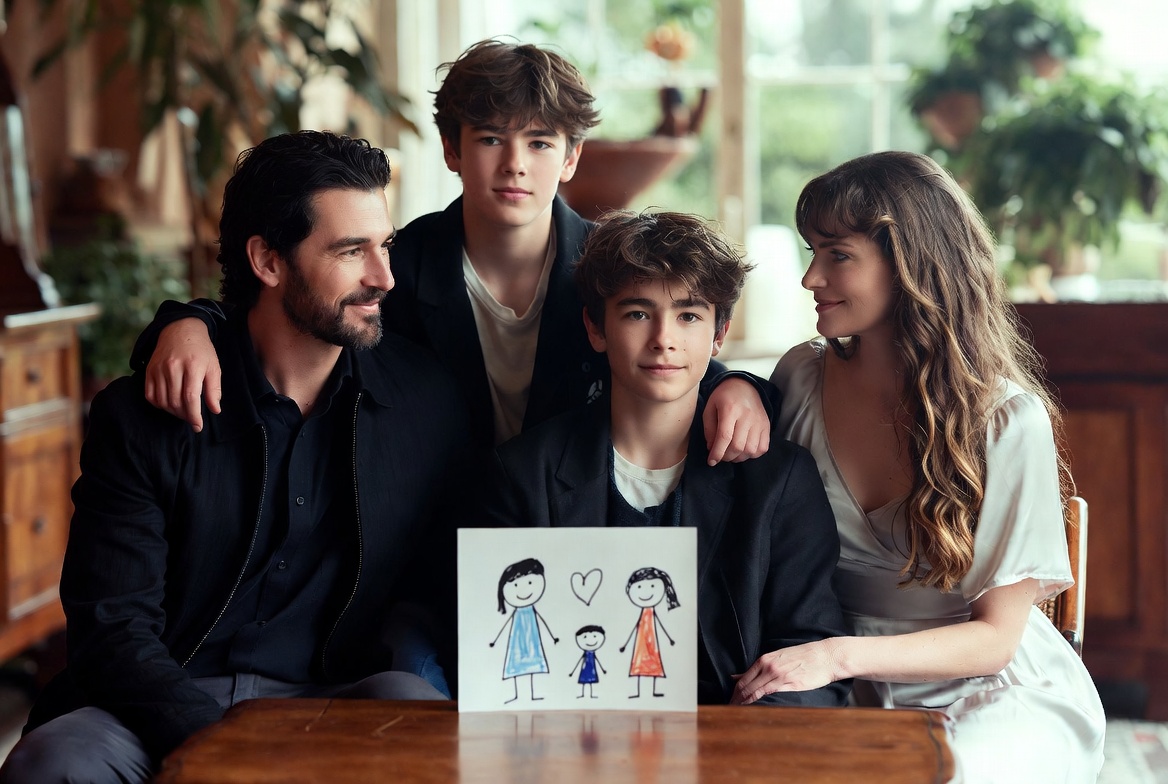
Years later, people still remember me as the Duke of Ravenshire, the man who rebuilt a political empire and survived the greatest betrayal of his life. But that is not how my children remember me. William remembers the father who answered every question patiently. Thomas remembers the father who waited until trust was earned. Oliver remembers the man who kept a simple drawing of a family because it was the first gift that made him feel truly accepted. Seraphine and I never tried to recreate the past. Too much had happened. Instead, we built something different. Something stronger because it was based on choice, honesty, and respect. I spent my life believing power came from controlling everything around me. I was wrong. True strength came when I finally accepted that the most important things in life cannot be controlled. They can only be protected, loved, and valued. I thought I lost seven years because of Malcolm Voss’s betrayal. But the truth is, I spent seven years becoming the man who was finally ready to be a father.