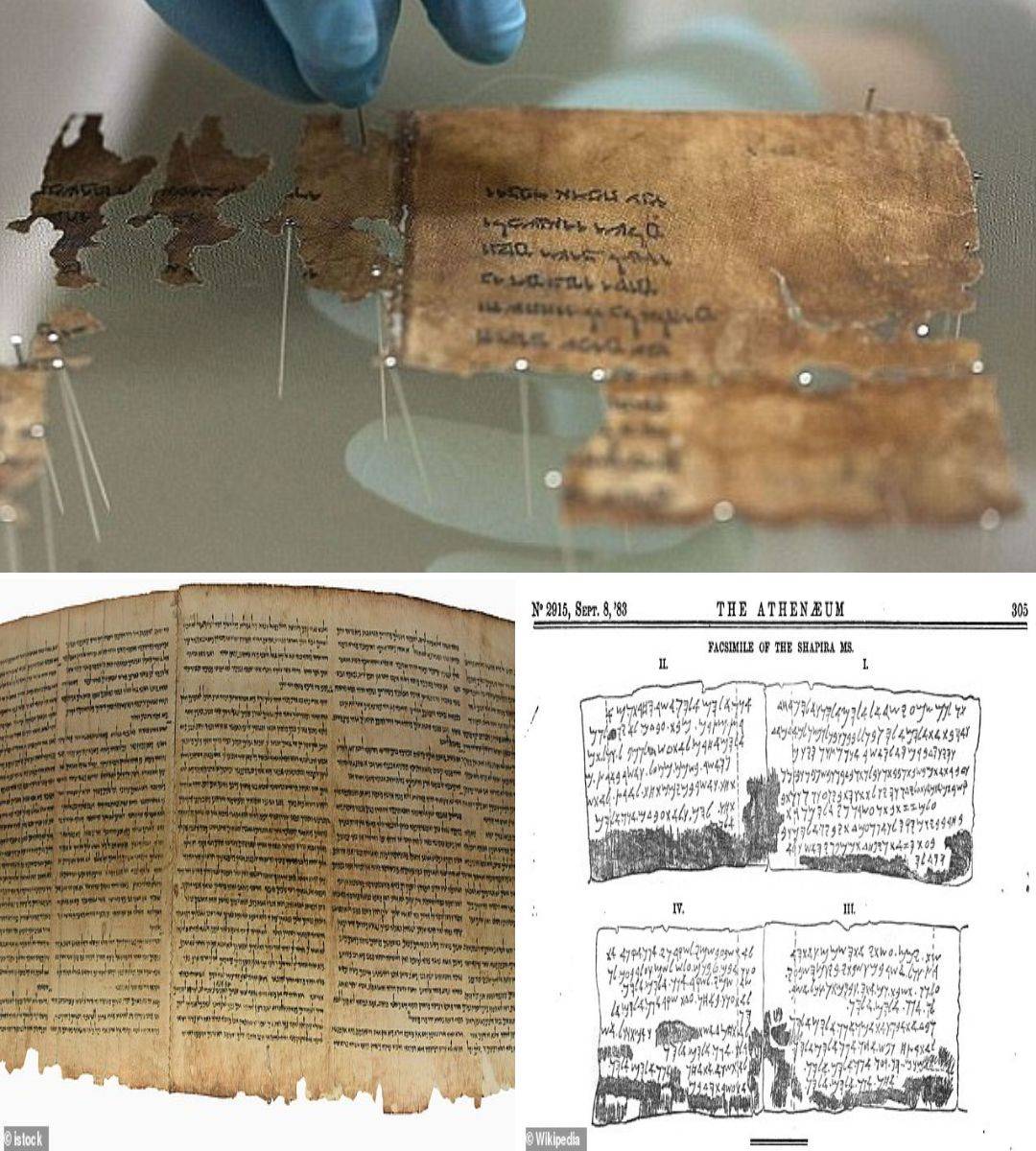
Could the enigma surrounding the Shapira Scroll finally be unraveling? An ancient manuscript that has been dismissed as a forgery for over a century may actually hold the title of the oldest known Biblical text, according to a recent study by an expert in the field.

In 1883, Jerusalem antiquities dealer Moses Willhelm Shapira introduced the world to 15 fragments of what he claimed were ancient writings from the biblical book of Deuteronomy. Initially, these pieces were sold to the British Museum for a staggering £1 million, but experts quickly branded them as fakes. Following this, the museum auctioned them off for a mere £25, and they vanished from history.
Now, Israeli-American scholar Idan Dershowitz is challenging the long-held belief that the scrolls are forgeries. In his new book, he presents compelling archival, linguistic, and literary evidence suggesting that these fragments could indeed be authentic ancient texts, possibly dating back to the First Temple period around 957 BC.
 Dershowitz has meticulously reconstructed the text from 19th-century transcriptions and illustrations, claiming that these fragments offer a unique glimpse into the early evolution of the Bible. He argues that the scrolls not only reflect a version of Deuteronomy but also contain notable differences, such as an 11th commandment that reads, “Thou shalt not hate thy brother in thy heart: I am God, thy God.”

The Shapira Scrolls have long been shrouded in controversy. When Shapira first unveiled them, biblical scholarship was still in its infancy, and the idea that the first five books of the Bible might not have been authored solely by Moses was revolutionary. Despite the initial excitement surrounding the discovery, skepticism grew when renowned French archaeologist Charles Simon Clermont-Ganneau declared them a forgery after inspecting them at the museum.

Dershowitz’s research has reignited interest in the scrolls, suggesting that they could be a precursor to the book of Deuteronomy, lacking the legalistic content found in the canonical version. This could indicate that they are not merely forgeries but rather an earlier iteration of the biblical text, providing a smoother narrative flow and a more original feel.
The implications of this discovery are profound. If confirmed, these fragments could offer an unprecedented window into the origins of the Bible, dating back to a time long before the Babylonian Exile. Dershowitz expresses his frustration over the scrolls’ dismissal as fakes, calling it a tragedy for both Shapira and the field of biblical studies.

Despite the skepticism from some scholars, including University of Chicago professor Jeffrey Stackert, Dershowitz remains optimistic. He believes that some of the original fragments may still exist and could one day resurface, allowing for a deeper understanding of biblical history.
As the research continues to unfold, the Shapira Scrolls may soon take center stage in the ongoing dialogue about the evolution of sacred texts. What other secrets might these ancient fragments hold?