
The Wild West is often romanticized in movies and stories, but many of the facts we believe about this iconic era are nothing more than myths. Prepare to have your mind blown as we unravel 25 of the most common misconceptions about cowboys, their lives, and the untamed frontier.
First up, the classic image of every cowboy donning a Stetson hat is more Hollywood magic than reality. While stars like John Wayne popularized this look, early cowboys sported a variety of hats, including bowlers and military caps. The Stetson did gain traction later in the 19th century, but its early versions were far from the iconic styles we see on screen today.
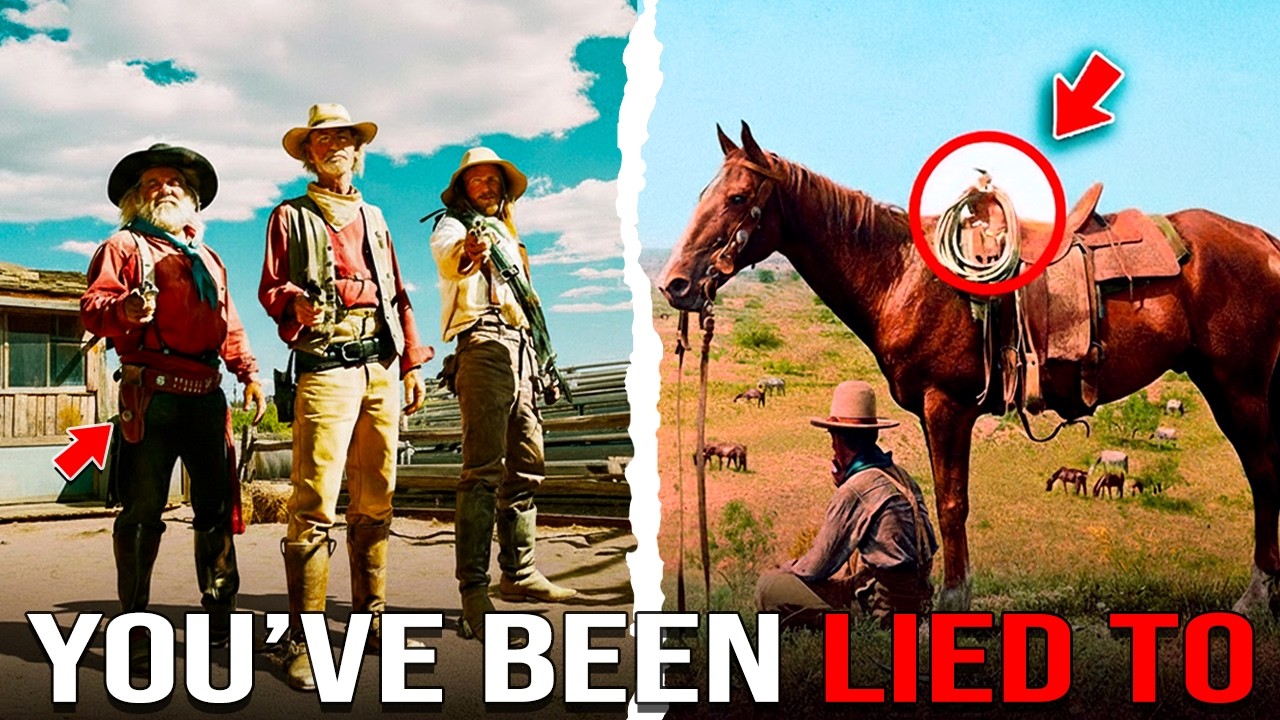 Next, let’s talk about the clean-cut cowboy. Hollywood often depicts these rugged men as fresh-faced heroes, but the truth is quite different. Life on the range was tough, and grooming was a luxury few could afford.
Most cowboys were unshaven and dressed in durable, worn clothing, with facial hair being a common sight.
Another myth is that all cowboys were white Americans. In reality, the workforce was incredibly diverse, with a significant number of Black and Hispanic cowboys contributing to the cattle industry. Many were former enslaved individuals or vaqueros from Mexico, bringing vital skills and techniques to the trade.
And what about the towering figures we see in films? The truth may surprise you—most cowboys were actually on the shorter side, averaging around 5 feet 5 inches tall. Their smaller stature made them more agile and better suited for long rides on nimble ponies, debunking the myth of the larger-than-life cowboy.
The idea that every cowboy was armed with a six-shooter is another fabrication. For many, carrying a firearm was impractical and often prohibited on the job. Instead, cowboys relied on tools like ropes and hammers, with guns primarily used for hunting or protection against predators.
The day-to-day life of a cowboy was far from glamorous. Contrary to the adventurous tales spun in fiction, their work involved long, grueling hours managing cattle, often in harsh conditions. The romanticized notion of cowboys battling outlaws is just that—a fantasy.
Even the bond between cowboys and their horses is exaggerated. Most working cowboys didn’t own their steeds; they were typically provided by ranches. These horses were often smaller, hardy animals suited for the rigors of cattle work, not the majestic creatures seen in films.
 The narrative of constant conflict between cowboys and Native Americans is another oversimplification. While tensions existed, most cowboys were too busy with their work to engage in violent confrontations. The real violence was often perpetrated by the military, not the everyday cowboy.
Hollywood also loves to depict Wild West towns as chaotic and lawless. However, many settlements actively sought to maintain order, with laws and local enforcement in place. Gunfights were infrequent, and strict regulations often kept firearms out of town.
The dramatic high noon duel is largely a cinematic invention. Real gunfights were spontaneous and chaotic, often arising from heated arguments rather than prearranged showdowns. The term “gunslinger” itself was popularized by films much later than the actual Wild West period.
Even the infamous gunfight at the OK Corral didn’t occur in the corral itself. This legendary shootout took place in a nearby alleyway and lasted only about 30 seconds, proving that the reality often differs from the dramatized versions we know.
And while six-shooters are often portrayed as powerful and accurate, early models were anything but reliable. Their effective range was limited, and many cowboys preferred rifles or shotguns for their superior power and accuracy.
Saloons, often depicted as chaotic brawling hotspots, were actually places where owners took measures to prevent extensive damage. Fights did occur, but they were typically brief and contained, not the epic battles portrayed in films.
 The portrayal of sheriffs as corrupt or cowardly is another trope that doesn’t hold up. Many lawmen were dedicated to their communities, working hard to maintain peace and order. The image of the corrupt sheriff serves more to elevate the hero than reflect historical reality.
Vigilante justice is often romanticized, but these groups frequently acted outside the law, sometimes leading to wrongful executions. The line between community protection and mob rule was often blurred, highlighting the complexities of justice in the Wild West.
The myth that gold was easily found during the gold rush is a classic tale. In truth, most prospectors faced disappointment and hard work, with fortunes often made by those supplying miners rather than the miners themselves.
Transportation in the West wasn’t solely reliant on horses. The expansion of railroads transformed travel and commerce, making trains a vital part of life in the late 19th century, a detail often overlooked in traditional narratives.
Tumbleweeds, iconic symbols of the West, are actually non-native plants that were introduced in the 1870s. Their association with the Wild West is a testament to how Hollywood has shaped our perceptions of the era.
Women played crucial roles in the Wild West, often overlooked in traditional narratives. From homesteaders to sharpshooters, women contributed significantly to frontier life, challenging the notion that the West was a male-dominated space.
 Train robberies, while thrilling in films, were not as common as depicted. Estimates suggest fewer than a thousand robberies occurred between 1866 and 1910, making them a rare event rather than a daily occurrence.
The idea of color-coded hats for heroes and villains is another Hollywood invention, designed to help audiences quickly identify characters. In reality, cowboys chose hats based on practicality rather than morality.
The stereotype of Native Americans as bloodthirsty savages is a harmful distortion of history. Native peoples were diverse and complex, often defending their lands against encroachment rather than launching unprovoked attacks.
The lone cowboy hero is a myth; cooperation and community were essential for survival on the frontier. Settlers relied on teamwork and shared resources, challenging the narrative of the solitary adventurer.
Lastly, the romanticized image of outlaws like Jesse James as Robin Hood figures is misleading. While they may have cultivated that image, historical evidence shows they were primarily motivated by self-interest and engaged in violent crimes.
The Wild West era, often thought to be a lengthy period, was actually quite brief, lasting roughly 30 years from the end of the Civil War to the early 1900s. By the turn of the century, the West had transformed significantly.
What Wild West myth surprised you the most? Share your thoughts in the comments below!


