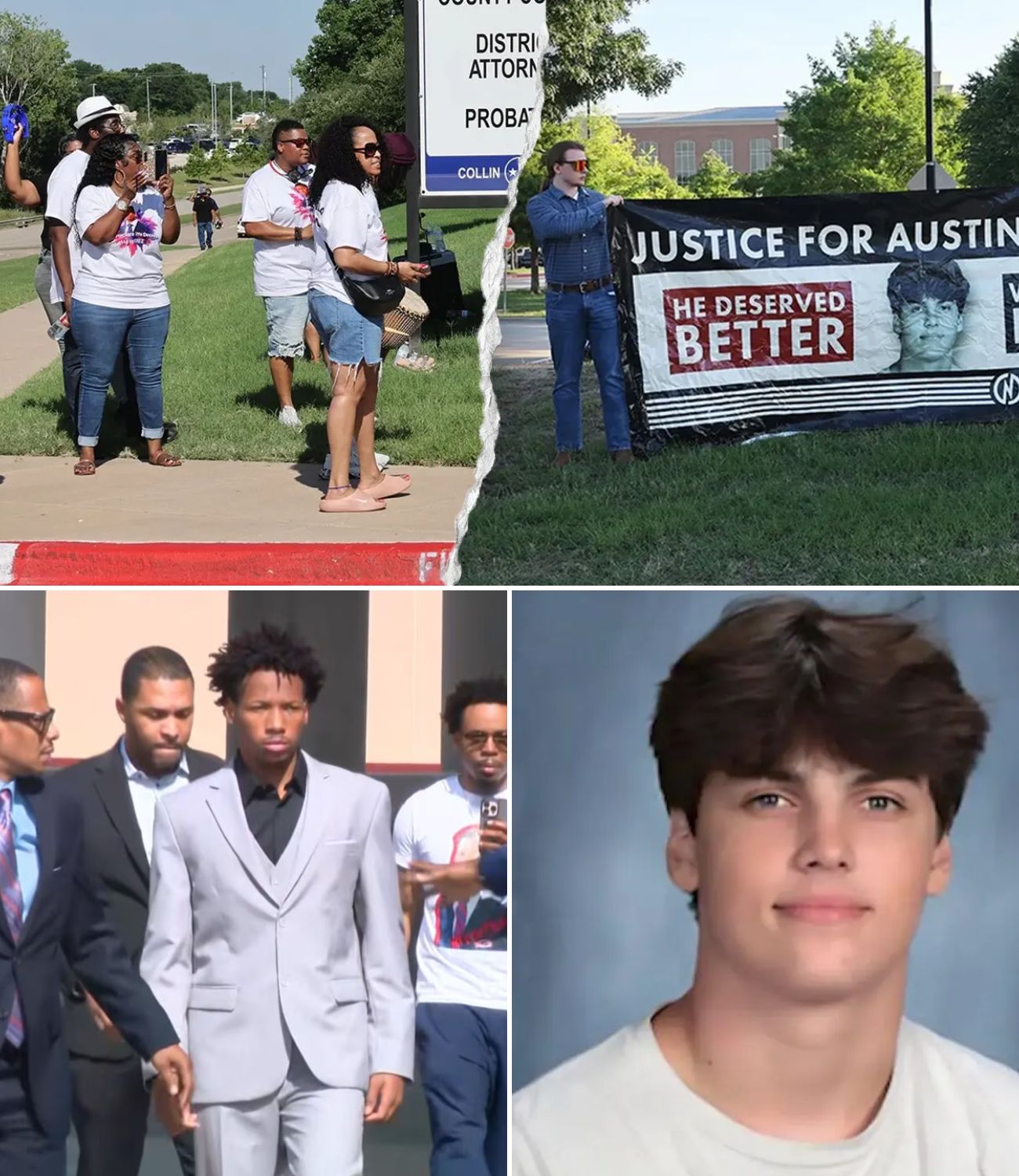
MCKINNEY, Texas — In a pivotal moment during the high-profile murder trial of Karmelo Anthony, jurors heard the 19-year-old’s first words captured on bodycam footage just moments after the fatal stabbing of 17-year-old Austin Metcalf at a Frisco track meet.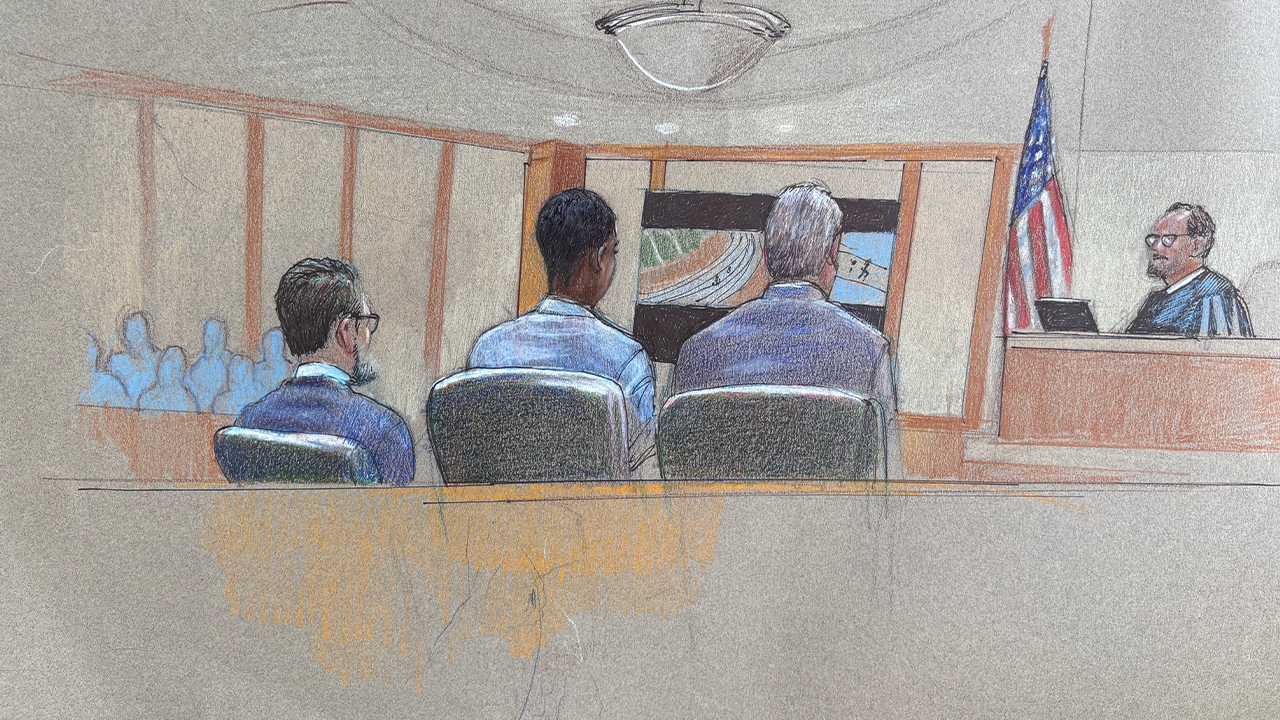
“He said, ‘I did it,’” prosecutors told the court, emphasizing the significance of those four words. The bodycam footage, shown to jurors for the first time on day two of testimony, captured Anthony’s immediate reaction following the violent confrontation under a team tent at the regional track event.
According to prosecutors, Anthony brought a 5-inch switchblade to the school-sanctioned athletic competition and used it during a dispute that escalated rapidly. The blade struck Metcalf once in the chest, causing a fatal wound. First responders testified about their frantic but ultimately unsuccessful efforts to save the young athlete’s life.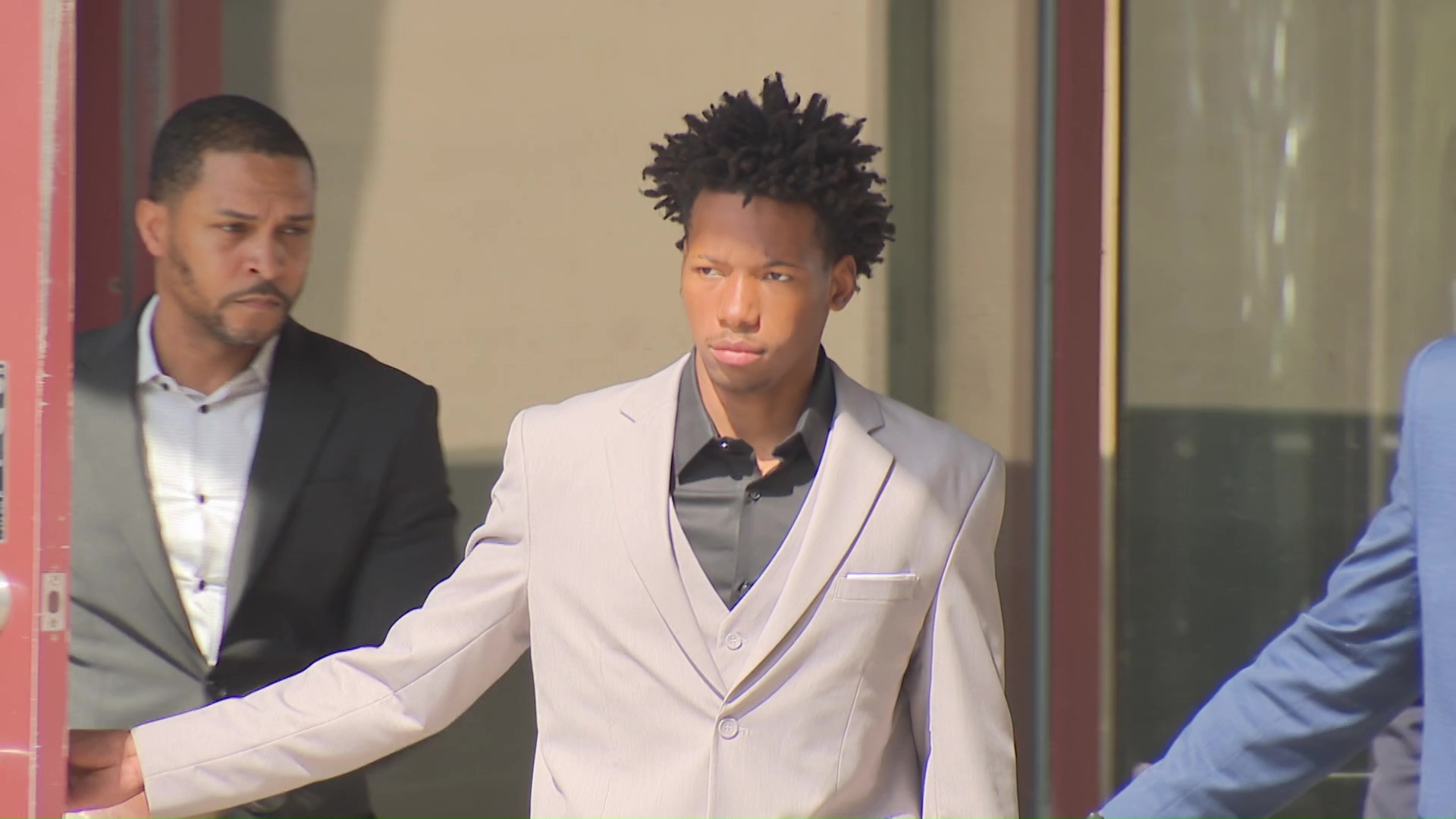
The prosecution argues the stabbing was a calculated and deliberate act. They presented evidence suggesting Anthony was the aggressor who provoked the confrontation before resorting to deadly force. Witnesses described the speed and intensity of the attack, painting a picture that directly contradicts Anthony’s claim of self-defense.
Defense attorneys, however, are fighting to frame the incident as a tragic, impulsive reaction born out of fear. They point to Anthony’s emotional state immediately after the stabbing and suggest he acted only after feeling physically threatened. Yet Anthony’s own words — “I did it” — delivered without any mention of fear for his life, may significantly undermine the self-defense narrative.
Emotional testimony from first responders and grieving family members has weighed heavily on the jury. Courtroom observers noted several jurors visibly moved as they watched bodycam footage and heard accounts of the chaos that unfolded on what should have been a routine day of competition for high school athletes.
The case has captivated the Dallas-Fort Worth region and drawn national attention. It raises difficult questions about youth violence, the presence of weapons at school events, and how quickly a verbal disagreement between teenagers can turn deadly.
Anthony faces five to 99 years in prison if convicted of first-degree murder. The jury must now decide whether his actions constituted a calculated killing or a panicked response in a moment of perceived danger.
As the trial moves forward, both families continue to sit through emotionally draining proceedings. Metcalf’s loved ones remember him as a promising student-athlete with a bright future, while Anthony’s supporters maintain he is not a cold-blooded killer but a young man caught in a terrifying situation.
Legal experts following the case note that Anthony’s immediate admission to officers, combined with the physical evidence, could prove decisive. The absence of any statement expressing fear for his life at the moment of arrest may be particularly damaging to the defense’s strategy.
The verdict in this emotionally charged trial is expected within the coming days. Whatever the outcome, the events of that April afternoon at the Frisco track meet have already left an indelible mark — two young lives forever altered, and a community searching for answers about how such violence could erupt at a high school sporting event.