The last male heir of America’s most storied fortune did not die broke, nor did he die a victim of circumstance. Vincent Astor died on February 3, 1959, at the age of 67, holding a fortune that had nearly doubled under his stewardship. Yet, in the final accounting of his life, he committed an act of deliberate erasure that no market crash or tax collector could have achieved.
He chose to end the dynasty. The $127 million estate he left behind was not destined for a son or a grandson, for there were none, but was funneled into a foundation chartered for a single purpose: the alleviation of human misery. It was a decision that transformed the Astor name from a symbol of Gilded Age excess into a vehicle for social repair, and it was a decision born from a wound inflicted on a cold April morning in 1912, when the RMS Titanic took his father to the bottom of the North Atlantic.
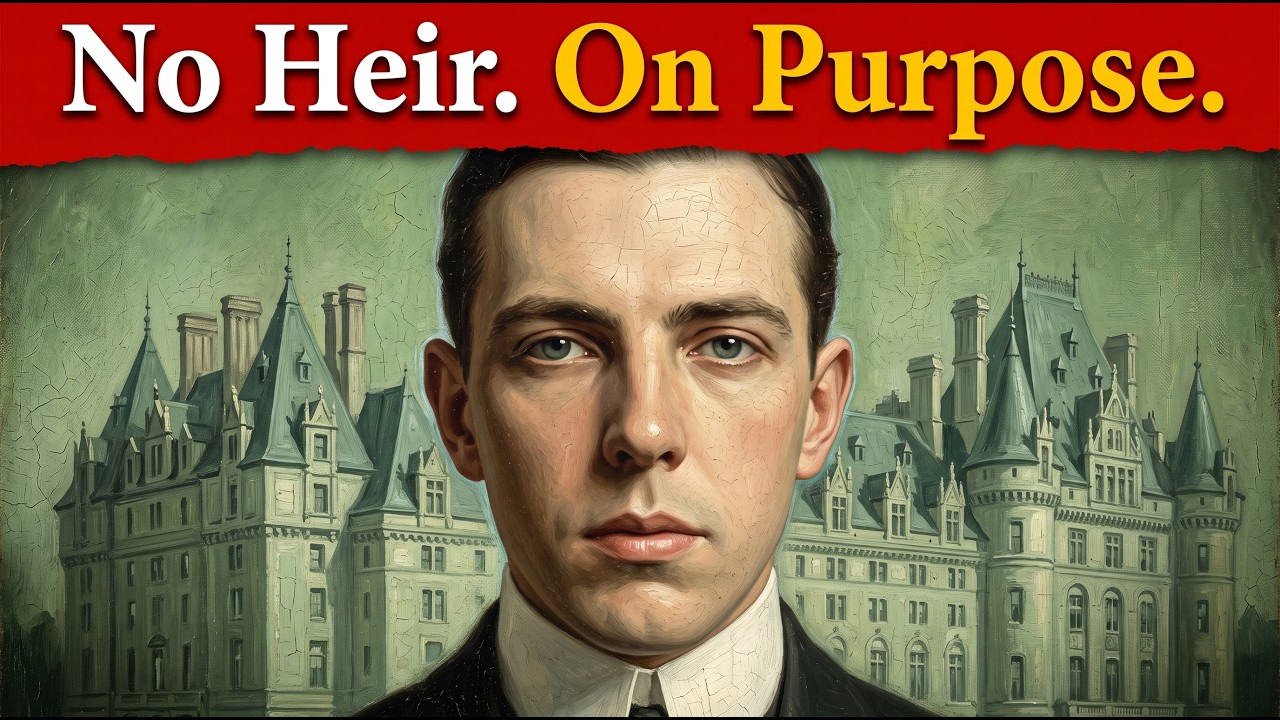 Vincent Astor was just 20 years old when the telegrams arrived at Harvard University, informing him that his father, John Jacob Astor IV, had perished in the sinking. The newspapers dubbed him the “boy millionaire,” the richest young man in America, but the fortune that landed in his lap was a poor substitute for the only person who had ever made him feel worthy of love. His father had been the one steady presence in a childhood dominated by a mother, Ava Lowle Willing, who was described in family histories and archival records as terrifying, abusive, and openly contemptuous of her son.
She called him stupid, clumsy, and lumpish-looking. The National Archives feature on the Astor family uses stark language to describe her treatment of the boy, noting that she saw in him someone she did not want. The Titanic did not just take a father; it removed the sole source of affection from a young man’s life, leaving him with an $87 million inheritance and a mother who had never wanted him.
The scale of that inheritance is difficult to grasp even in modern terms. Time magazine’s obituary, published on February 16, 1959, placed the original inheritance at $87,200,000. Adjusted for inflation using the Bureau of Labor Statistics Consumer Price Index, that sum equates to roughly $2.
9 billion today. However, when measured against average income, the way economists at Measuring Worth calculate the command of wealth, the figure soars to approximately $20 billion. This was the fortune that a heartbroken 20-year-old controlled, a real estate empire that stretched from the tenements of the Lower East Side to the commercial blocks of Fifth Avenue, encompassing hundreds of buildings, thousands of tenants, and the St.
Regis Hotel, a monument his father had built in 1904 for $5. 5 million. Vincent was, in effect, the landlord of New York, and he inherited it all because his father had gallantly stepped aside on a sinking ship to help his pregnant young wife, Madeleine, into a lifeboat.
The mythology surrounding Vincent Astor often paints him as a dilettante who squandered the family wealth, but the receipts tell a different story. He took control of $69 million, the bulk of his father’s estate, and over the next 47 years, he actively managed it, sold off the decaying slums, and reinvested in profitable ventures. In 1937, he merged his own magazine, Today, with the struggling Newsweek, investing $600,000 alongside W.
Averell Harriman and becoming chairman of the publication. He sold the St. Regis Hotel in 1927 but bought it back at a foreclosure auction in 1935 for just over $5 million, returning it to profitability within two years.
When his estate was probated after his death, it was valued at $127,377,021, a near doubling of the fortune he had inherited. The money was not lost; it was redirected. Vincent’s genius was not in accumulation but in the deliberate dismantling of the family’s extractive legacy.
That dismantling began in earnest during the 1930s, under the mayoralty of Fiorello LaGuardia. Vincent looked at the Astor holdings on the Lower East Side and saw what they truly were: slums where immigrant families paid rent to a name they would never meet. He began demolishing these tenements by the dozen, replacing them with eight five-story walk-up apartment buildings for working families.
He sold a Lower East Side parcel to the New York City Housing Authority for less than half its market value. Valuable Harlem real estate was converted into children’s playgrounds. When asked about these actions, Vincent offered a simple explanation that the National Archives quotes as his standard refrain: it was good business.
But it was more than that. He was rewriting the terms of the Astor fortune, one demolished tenement at a time, using the wealth extracted from the poor to build infrastructure for them. It was a form of reparations enacted by a man who understood that the name he carried was built on the backs of those who could not fight back.
The personal tragedy that defined Vincent’s life was compounded by a medical reality that sealed the fate of the dynasty. An illness early in his first marriage left him unable to have children. He knew from the age of 22 that the male line of the American Astors would end with him.
 There would be no son to carry the fortune forward, no fifth generation to build upon the empire. This knowledge sat at the center of every decision he made. He married three times, first to Helen Dinsmore Huntington in 1914, a union that lasted 26 years but produced no heirs.
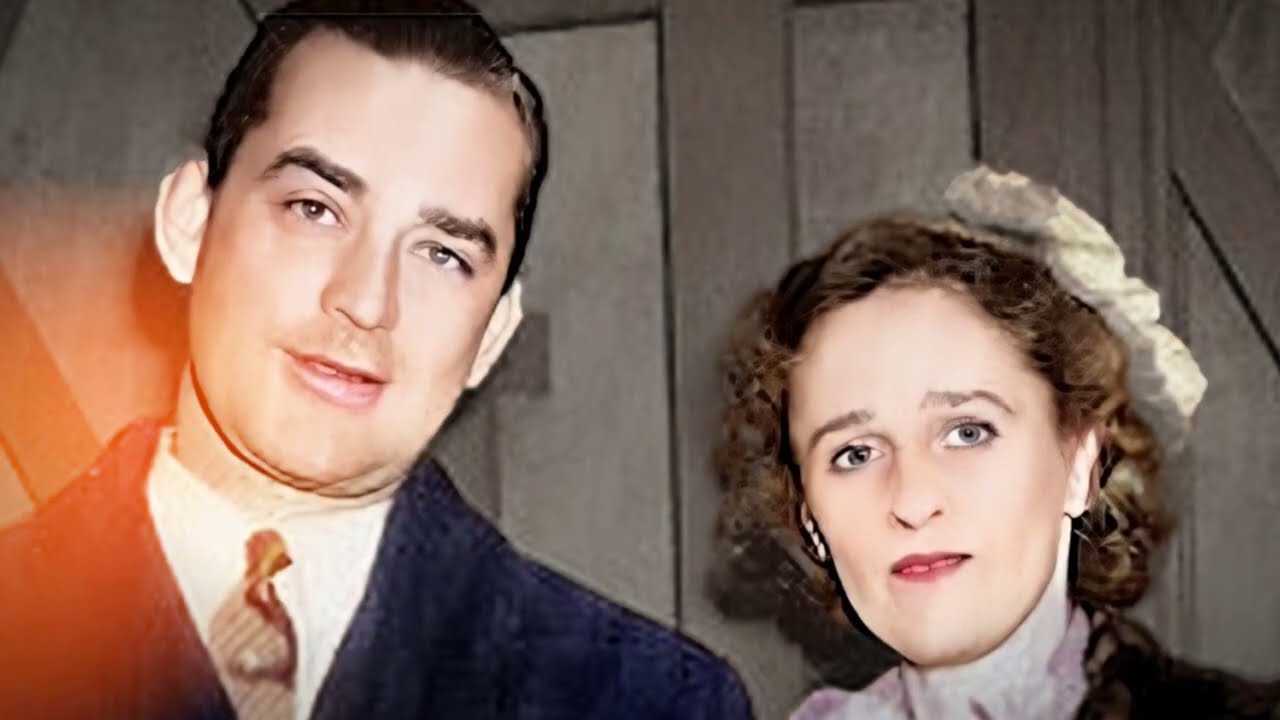
He then married Mary Benedict Cushing in 1940, one of the famous Cushing sisters, but that marriage also remained childless and ended in divorce in 1953. His third wife, Brooke Russell Marshall, married him in October 1953 and stayed with him until his death, but they too had no children. Three marriages, zero heirs, and a man who knew that every dollar he steered would eventually pass to someone outside the bloodline.
Rather than adopting an heir or designating a cousin to carry the name, Vincent made a conscious choice to let the fortune leave the family. He watched the Rockefellers build a family office to preserve their wealth across generations. He watched the English branch of his own family, led by his cousin William Waldorf Astor, purchase a peerage and use the British system of entailment to keep their fortune intact.
The English Astors, who had left America in 1891 with $100 million, bought Cliveden and Hever Castle, and were made Barons and Viscounts. They used the machinery of aristocracy to ensure their wealth passed whole to the eldest son, generation after generation. Vincent saw this and rejected it.
He did not build a dynasty trust or a holding company. Instead, in 1948, he established the Vincent Astor Foundation with a charter that stated its purpose as the alleviation of human misery. He pointed the fortune away from the name and toward the city that had made it.
Vincent’s life was not defined solely by wealth and philanthropy. He served his country with distinction, joining the Naval Reserve in 1915 and donating his yacht, the Noma, to the Navy during World War I. He shipped overseas aboard it in June 1917 and engaged German submarines in the Atlantic, earning a Navy Cross for his captain and a promotion to lieutenant.
Between the wars, he founded an informal intelligence network called the Room, which met monthly at a townhouse on East 62nd Street and included members like Kermit Roosevelt, J. P. Morgan, and Nelson Doubleday.
The network funneled economic and political intelligence directly to President Franklin Roosevelt, a childhood friend and Dutchess County neighbor. When Roosevelt contracted polio, Vincent lent him the indoor swimming pool at Ferncliff for hydrotherapy. He provided a private subway stop beneath the Waldorf Astoria with an elevator that allowed the president to move from train to hotel without being seen, concealing his paralysis from the public.
During World War II, Vincent volunteered at age 50, was appointed area controller for New York, and was promoted to captain, earning a Navy Commendation Medal for his service.
The contrast between Vincent and his ancestors was almost too clean. The first John Jacob Astor built the fortune on fur and Manhattan real estate, buying land and never selling it. His descendants used that wealth to decide who counted in high society, to build palaces, and to hold balls that excluded the very people who paid their rents.
Vincent used it to tear down those palaces and build playgrounds. He funded the New York Public Library, the Metropoltan Museum of Art, which built the Astor Court with his grants, the Bronx Zoo, and the restoration of Bryant Park. Nearly every dollar from the foundation stayed inside the five boroughs, returned to the neighborhoods the Astor leases had extracted from for more than a century.
 The fortune that had once built a wall between the rich and everyone else was now being spent, by choice, on the other side of that wall.
The final chapter of Vincent’s life contained a cruel irony that seemed to echo the tragedy of his father’s death. In 1958, while entering a theater in Poughkeepsie, New York, to see A Night to Remember, the film about the sinking of the Titanic, Vincent suffered his first heart attack. The film depicted the night his father died.
46 years after the sinking, the ship that took his father reached out from a movie screen and stopped his heart. He died on February 3, 1959, of a heart attack at his home at 120 East End Avenue in Manhattan. He was 67 years old.
His last will, signed the previous June, left the bulk of his estate to the Vincent Astor Foundation. Brooke received $2 million in direct bequests. 24 other individuals shared $827,500.
The Ferncliff main house was bequeathed to the Benedictine Hospital in Kingston, New York.
The contest came quickly. John Jacob Astor VI, Vincent’s half-brother, the posthumous son born four months after the Titanic sinking, claimed Vincent had been of unsound mind when the will was signed. The settlement gave him $250,000 from a fortune that had once measured against the wealth of nations.
Jakey, as the family called him, put the matter in terms that landed: he said Vincent had the legal, not the moral, right to keep all the money. But Vincent’s choice was deliberate. He had the resources to build a dynasty trust.
He had the example of the English Astors, who were still titled and wealthy. He had the lawyers. He chose none of it.
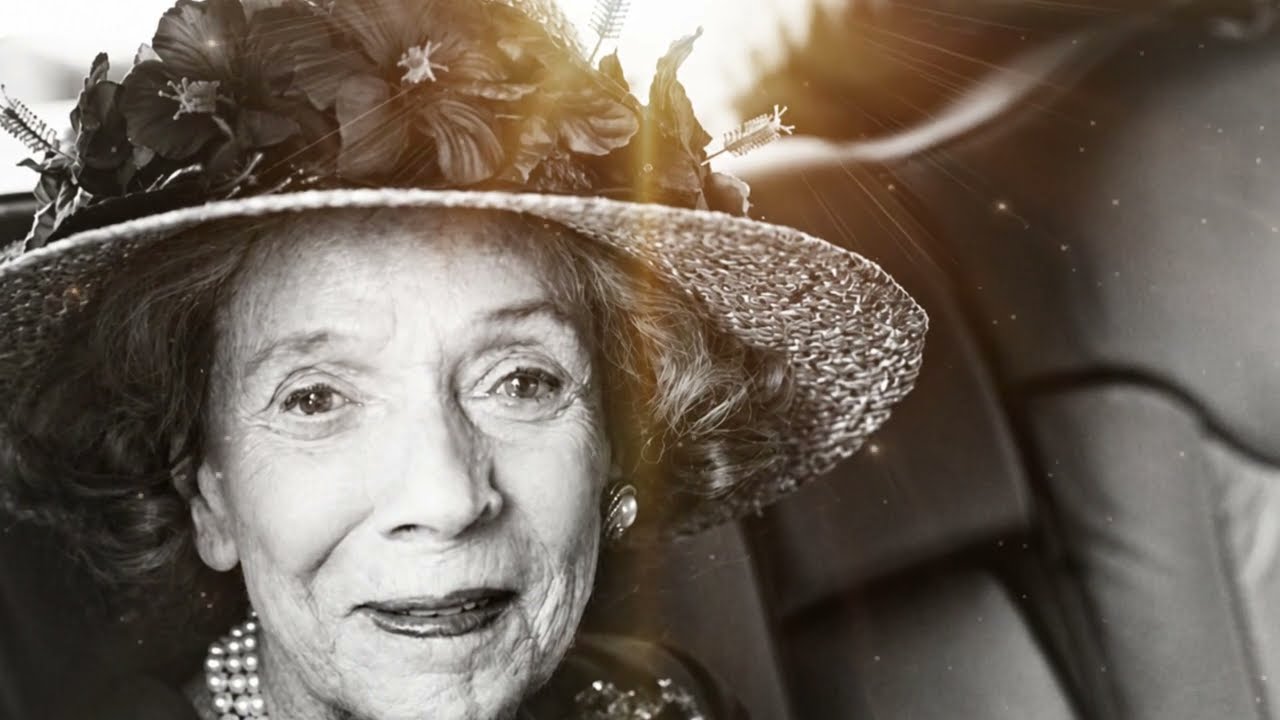
Instead, he built a foundation and pointed it at strangers. The Vincent Astor Foundation, endowed with $65 million from his estate, became the vehicle for everything Vincent believed the Astor money should do. Brooke Astor took over as president and ran the foundation for close to four decades, giving away between $175 million and $195 million before she dissolved it in 1997, exhausting the assets by design.
The structural lesson is stark. The American Astors never built a family office or a dynasty trust. But Vincent’s case stands apart from that diagnosis.
He had the money, the lawyers, and the precedent. He watched the Rockefellers build a family office. He watched the English branch build a peerage.
 And he chose to build a foundation instead, pointed away from the name. The controlled experiment buried in the Astor family history proves that what happened to the American branch was not inevitable. In 1891, William Waldorf Astor left America with $100 million and bought his way into the British aristocracy.
His son, Waldorf, the second viscount, married Nancy Langhorne, who became the first woman to take a seat in the British Parliament. The English Astors became a political family, their wealth protected by the peerage system that passes estates whole to the eldest son. They gave Cliveden to the National Trust in 1942, preserving it beyond the reach of estate taxes while keeping the right to lease apartments within it.
The current head of the English line, William Waldorf Astor III, the fourth Viscount Astor, was estimated at $278 million by the Sunday Times Rich List in 2017. Two branches, same blood, same starting capital. The American branch, richer and more prominent at the start, produced a man who chose to dismantle the dynasty himself.
The English branch, mocked at the time as a sulking retreat, is still titled, still wealthy, and still living on estates in the English countryside.
The irony is hard. The Americans fought a revolution to escape the machinery of aristocracy, the inherited titles and entailed estates that lock wealth inside a bloodline. And it was that exact machinery, embraced by the one branch that crossed the ocean in the other direction, that kept the English Astors whole while the American line dissolved.
But Vincent knew. He watched the English branch keep its fortune. He watched the Rockefellers build their structures.
The example, the resources, and the time were all in front of him. And he looked at the question of structure and gave a different answer. The dynasty had cost him his father.
It had left him with a mother who saw nothing in him worth keeping. It had placed $87 million in his hands at the age of 20 and given him a name that opened every door in the country, and not one of those doors led to the thing he needed. He decided that the kindest thing he could do for the Astor name was to let it go.
The loneliest heir in America lost his father to the Atlantic and received a fortune in his place. Vincent served in two wars. He ran an intelligence network for a president he called by his first name.
A national magazine bore his name on the masthead. Slum tenements came down and playgrounds went up in their place for children whose parents paid the rent his family had once collected. Three marriages and buried the hope of a biological heir before the first wedding was over.
And in the end, he took the fortune that arrived the morning his father drowned and gave it to the city that fortune had been extracted from dollar by dollar for more than a century. They recovered a gold pocket watch from his father’s body in the North Atlantic in April 1912. Vincent carried it for 23 years.
Then, in 1935, he gave it away. A christening gift to the infant son of his father’s secretary, a boy named William Dobbin. Not a relative, not an Astor, a child outside the bloodline, in whose hands the last relic of his father would outlive the name.
The dynasty ended not with a crash, but with a choice. And the choice was made by the man who carried the name and decided it was not worth the cost.