When Bonnie Parker died on May 23, 1934, she was wearing a wedding ring. It was not Clyde Barrow’s. Days before her 16th birthday, Bonnie had married high school acquaintance Roy Thornton, but the marriage fell apart within months. After Thornton was jailed for robbery in 1929, Bonnie never saw him again, yet she never divorced him either.
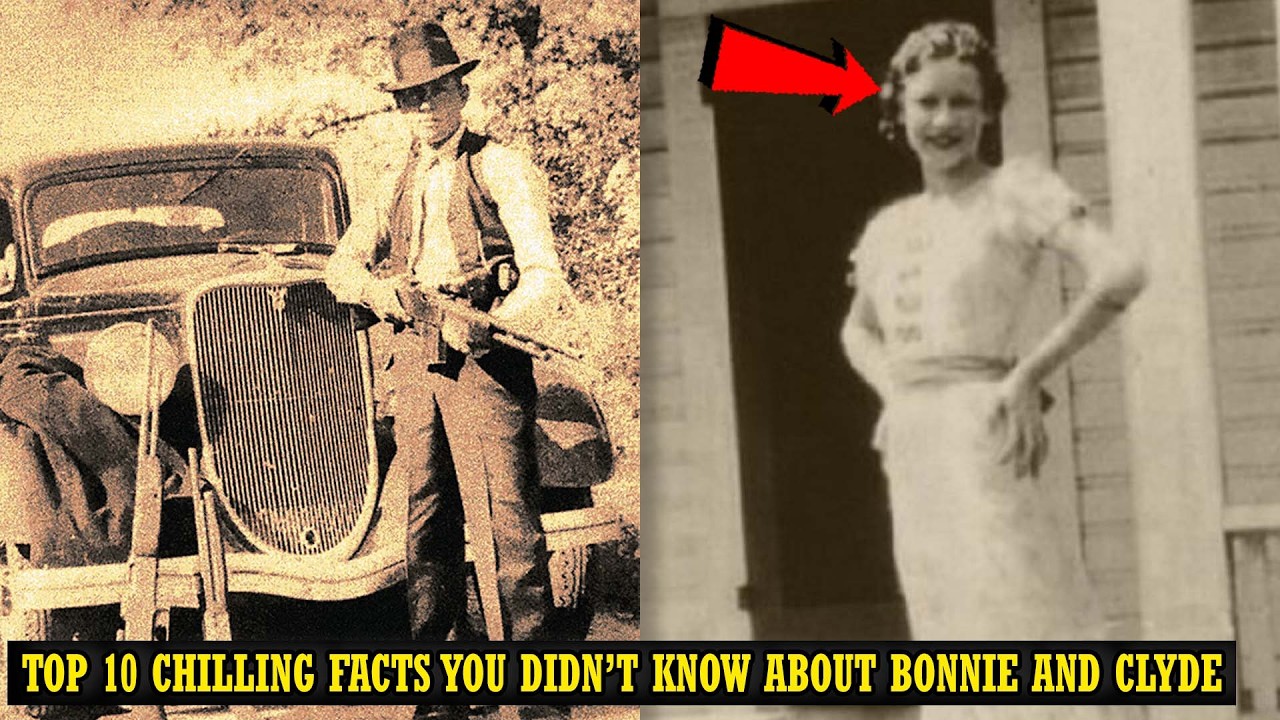
At her death, she still wore his ring and carried a tattoo of two interlocking hearts marked with the names Bonnie and Roy on her inner right thigh. Historians note that her unresolved marriage reflects the era’s social realities, when divorce was costly, uncommon, and often stigmatized, particularly for young women with limited resources. Long before he became an outlaw, Clyde Barrow tried to join the U. S.
Navy. His application was rejected during a medical exam because doctors determined he still suffered lingering effects from a serious childhood illness, possibly malaria or yellow fever. The rejection was deeply discouraging, especially since Clyde had already tattooed USN on his left arm in anticipation of acceptance. Military service was seen as a respectable path out of poverty for working-class young men at the time, and the Navy’s strict physical standards meant his disqualification closed off one of the few legitimate opportunities available to him.
Historians cite this episode as an important emotional setback in his early life, one that helped shape his later turn away from conventional society. Despite their reputation as Depression-era bank robbers who targeted wealthy financial institutions, Bonnie and Clyde rarely robbed banks at all. The majority of their crimes involved small, locally owned gas stations and neighborhood grocery stores, where thefts often yielded no more than five or ten dollars. Banks were heavily protected by armed guards and reinforced safes, while small businesses were lightly guarded and kept cash on hand, making them easier though far less profitable targets.
The image of the pair as modern Robin Hood figures emerged largely after their deaths, shaped by sensational newspaper headlines, popular songs, and later Hollywood films. In reality, their crimes reflected desperation and a daily struggle to survive rather than any symbolic blow against powerful institutions. In January 1932, Clyde Barrow was serving a 14-year sentence in Texas for robbery and automobile theft at the East Prison Farm, a facility known for severe discipline and exhausting labor. Unable to endure the conditions, he intentionally damaged his own foot in hopes of being transferred to a less punishing institution.
Historical sources differ on whether he acted alone or with help from another inmate. The injury permanently impaired his ability to walk normally and made driving while wearing shoes difficult for the rest of his life. Ironically, he was granted parole and released just six days later, making the self-inflicted damage unnecessary. The episode illustrates a tragic irony: Clyde endured lifelong consequences for an act driven by fear of confinement only to discover freedom was already near.
On the night of June 10th, 1933, Clyde was driving at high speed along back roads in North Texas with Bonnie beside him. He failed to notice a warning sign indicating a bridge ahead was under construction, and their Ford V8 crashed through a roadside barrier, coming to rest in a dry riverbed. Corrosive fluid from the car’s battery spilled during the crash and caused severe, permanent damage to Bonnie’s right leg. From that point on, she walked with a noticeable limp and sometimes had to hop short distances or rely on Clyde’s assistance to move.
The accident, often overlooked in popular retellings, effectively ended any fantasy of carefree outlaw adventure. Letters attributed to Bonnie and testimony from associates confirm that her mobility was severely restricted afterward, limiting where the pair could go and shaping their daily life with physical pain, dependence, and vulnerability. After the couple’s deaths, a Louisiana sheriff who had taken part in Frank Hamer’s six-man posse tried to claim their bullet-riddled Ford V8 sedan. A federal judge ruled, however, that the car, having been stolen earlier by Bonnie and Clyde, legally belonged to its rightful owner, Ruth Warren of Topeka, Kansas.
Warren eventually leased and later sold it to Charles Stanley, an anti-crime speaker who displayed it alongside the mothers of Bonnie and Clyde as a traveling exhibition. Today, the so-called death car remains on public display at Whiskey Pete’s Resort and Casino, drawing visitors decades after the events that made it famous. The legal ruling underscored that notoriety did not erase property rights, even for objects tied to infamous criminals. During her school years, Bonnie Parker showed strong talent for creative writing, particularly poetry.
In 1932, while briefly jailed after a failed attempt to steal from a hardware store, she composed a small collection of ten poems she called Poetry from Life’s Other Side. One well-known piece, The Story of Suicide Sal, told of a naive rural girl drawn into wrongdoing through a relationship with a boyfriend. Just two weeks before her death, Bonnie shared another poem, The Trail’s End, with her mother; its closing lines imagined Bonnie and Clyde meeting the same fate, remembered by loved ones with sorrow and by authorities with relief. Her poetry provides rare insight into her inner world, contrasting sharply with the public image constructed by newspapers and later films.
Clyde Barrow’s first recorded arrest came in 1926, stemming from a rental car he had taken in Dallas and failed to return after visiting a former high school girlfriend. The rental company chose not to pursue the case, but the arrest remained on his record. Only three weeks later, Clyde was taken into custody again, this time with his older brother Ivan Buck Barrow, for possession of a truckload of stolen turkeys, an offense contemporaries described as almost absurd in its simplicity. These early arrests mattered not for their seriousness but because they showed how Clyde’s path began with minor, trivial offenses rather than grand criminal ambition.
Although closely bound during life, Bonnie and Clyde were buried separately. The pair had expressed a wish to be buried together, but Bonnie’s mother, who strongly opposed her daughter’s relationship with Clyde, had Bonnie buried in a different cemetery in Dallas, ensuring permanent separation in death. Clyde was interred alongside his brother Marvin, with a grave marker bearing an epitaph he had selected himself: Gone but not forgotten. The separation underscored the enduring influence of family authority and social norms, with burial decisions resting with surviving relatives rather than public opinion or personal wishes.
Bonnie’s mother’s choice reflected moral judgment and a desire to distance the family from Clyde’s influence, while Clyde’s family honored his chosen epitaph, preserving his humanity beyond his public reputation. When the six-man law enforcement team led by former Texas Ranger Captain Frank Hamer brought the pursuit to an end near Sales, Louisiana, on May 23rd, 1934, news spread quickly and drew onlookers to the scene within hours. As crowds gathered, curiosity turned unsettling. According to Go Down Together by Jeff Guinn, several spectators attempted to remove physical mementos from the site and the vehicle before officers intervened.
Despite that, a few people succeeded in taking small personal items connected to Bonnie, underscoring how quickly the moment shifted from law enforcement action to public spectacle. The aftermath of their deaths revealed as much about American society in the 1930s as it did about the outlaws themselves, as sensational newspaper coverage, rumor, and mythmaking had turned them into national figures. The real story of Bonnie Parker and Clyde Barrow is far more unsettling than the romantic legend that survived for decades. Behind the poems, photographs, and Hollywood portrayals were two deeply flawed young people shaped by poverty, bad choices, physical suffering, and a relentless cycle they could not escape.
Their lives were marked less by glamour than by desperation, mythmaking, and consequences that followed them to the very end.