The frozen mud of the Ardennes had barely thawed, but the fragile unity of the Allied high command was about to shatter not on the battlefield, but in a cramped, overheated office in Versailles. On January 7, 1945, Field Marshal Bernard Law Montgomery stood before the world’s press and delivered a performance that would nearly cost him his command. Within hours, General Dwight D.
Eisenhower was drafting an ultimatum that threatened to tear the Grand Alliance apart, a document so volatile it could have changed the course of the war and the post-war order. The pen, not the tank, was about to deliver the most decisive blow of the European theater.
 Montgomery’s press conference was a masterclass in self-congratulation, a calculated act of hubris that ignored the 19,000 American dead who lay beneath the snow. He described the Battle of the Bulge as “one of the most interesting and tricky” problems he had ever handled, a phrase that trivialized the desperate sacrifice of the US 101st Airborne at Bastogne. He spoke in the first person singular, claiming, “I employed the whole available power.
I put it into the fight with a bang.” The British press lapped it up, splashing headlines across London that screamed “Monty Saves the Yanks,” but to the American commanders listening 300 meters away, it was a declaration of war.
The reaction inside Supreme Headquarters Allied Expeditionary Force was volcanic. General Omar Bradley, who had been forced to hand over 200,000 American troops to Montgomery’s temporary command during the crisis, was apoplectic. He told Eisenhower that he would resign his post rather than serve under the British field marshal again.
General George Patton was reportedly furious, demanding permission to confront Montgomery directly. The American officer corps, which had bled for every inch of frozen ground, saw the press conference not as a victory lap but as a public humiliation, a narrative that cast them as incompetent children rescued by a British savior.
Eisenhower, the master of coalition politics, had spent three years absorbing Montgomery’s insults. He had tolerated the British general’s open disdain for his strategic vision, his constant demands for total command of all ground forces, and his patronizing lectures on tactics. The Supreme Commander had viewed Montgomery’s brilliance as worth the headache, a necessary evil to keep the alliance functioning.
But this was different. This was a public betrayal. Montgomery had not just insulted Eisenhower’s generals; he had threatened the political stability of the entire coalition by undermining the confidence of the American public in their own army.
The root of the conflict lay in a fundamental shift in the balance of power. In 1942, Britain was the senior partner, providing the experience and the strategic bases. By 1945, the United States was supplying 80% of the men, 90% of the equipment, and nearly all the fuel.
Montgomery was fighting the war as if it were still 1942, operating under the delusion that he was the indispensable star of a solo performance. He failed to grasp that Eisenhower’s role was not just military but deeply political, a delicate balancing act designed to keep 12 different nations from tearing each other apart.
 Montgomery’s tactical decisions during the Battle of the Bulge had been sound. He had stabilized the northern shoulder of the salient, regrouping the scattered American units and blunting the German spearhead. But his manner was catastrophic.
He swept into the US First Army headquarters like a feudal lord, refusing to look exhausted officers in the eye. He rejected their defensive plans, reorganized their lines, and reportedly told them, “I shall tidy up this mess.” He forced Bradley to travel to him, then lectured the American commander on basic tactics as if he were a failing cadet.
The atmosphere became so poisonous that American officers openly joked about fighting the British instead of the Germans.
The tipping point came when Eisenhower realized that Montgomery’s behavior had made the current command structure unworkable. The Supreme Commander sat at his desk, his face set in stone, and drafted a cable to General George Marshall in Washington. The words were cold and precise.
He detailed the breakdown of trust, the insubordination, and the public humiliation of the US Army. Then he delivered the ultimatum that would change history: if Montgomery was not removed or his attitude did not change, Eisenhower himself would resign. The equation was simple.
It is him or me.
This was not a bluff. Eisenhower was offering the Combined Chiefs of Staff a choice between the Supreme Commander of all Allied forces and a difficult, albeit brilliant, field marshal. He showed the draft to Montgomery’s chief of staff, Freddie de Guingand, who had rushed to Versailles after hearing rumors of the press conference fallout.
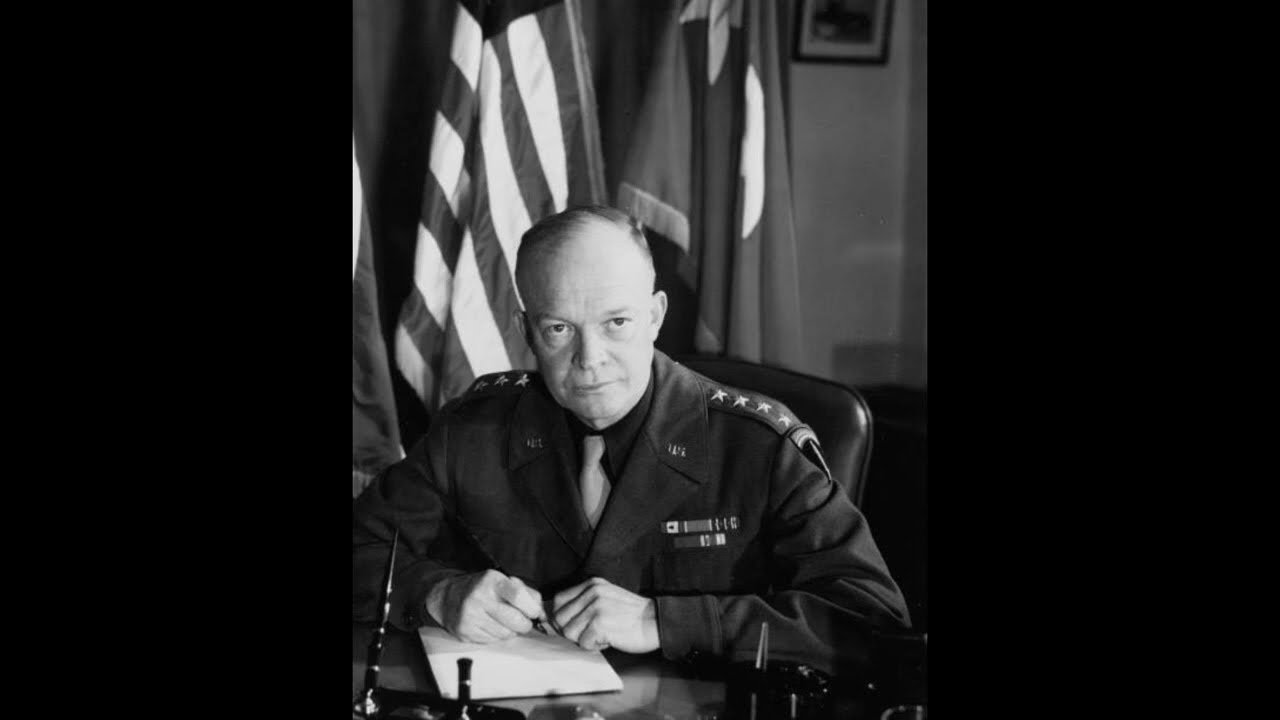 When de Guingand read the words, the blood drained from his face. He realized that Eisenhower was not asking for an apology; he was preparing to fire the most famous general in the British Empire. The order was ready to be sent.
De Guingand drove through a blizzard to reach Montgomery’s tactical headquarters, arriving to find the field marshal as cheerful as ever, utterly oblivious to the storm he had created. De Guingand did not waste time on pleasantries. He slammed his hand on the table and told Montgomery to stop talking.
“Ike is going to fire you,” he said. “And he has the full support of Washington and London.” Montgomery laughed, refusing to believe it.
“Ike wouldn’t do that,” he replied. “He needs me.” But de Guingand described the letter, the look in Eisenhower’s eyes, and the fact that even Winston Churchill could not save him this time.
The reality hit Montgomery like a physical blow. The smirk vanished, replaced by a look of genuine terror. He slumped into his chair, suddenly looking small and old.
For the first time in the war, the great field marshal was afraid. He had miscalculated everything. He was not dealing with a weak politician; he was dealing with the most powerful man in the Western world, and he had pushed him one step too far.
The silence in the trailer was absolute. The indispensable man was about to be discarded.
 The next morning, a letter arrived on Eisenhower’s desk. It was written in Montgomery’s hand, and it was not arrogant or demanding. It was a total, unconditional surrender.
“Dear Ike,” it read, “I am distressed that my note may have upset you. I am your very devoted subordinate.” He promised to do whatever Eisenhower wanted and signed it, “Your very devoted servant, Monty.”
It was the most humiliating moment of his life, a desperate plea to keep his job. Eisenhower read the letter without gloating. He simply nodded, placed the firing order in his secret file, and sent a cool, professional reply accepting the apology.
The crisis was averted, but the damage was permanent. The press was told that all was well, that the alliance was stronger than ever. But Eisenhower never trusted Montgomery again.
The relationship became purely functional, stripped of any warmth or camaraderie. From that day forward, Eisenhower leaned more heavily on Omar Bradley, giving the Americans the lead in the final race into Germany. When the Rhine crossing came, Eisenhower let the Americans take the glory, leaving Montgomery to stage his own elaborate crossing that mattered little to the strategic outcome.
The “shut up or get out” moment, as it would later be known, cemented American dominance in the post-war world. It was the moment the baton passed definitively from the British Empire to the United States. Churchill knew it, privately telling his staff that Montgomery had nearly wrecked everything.
In the history books, they stood side by side on Victory Day, but in the private corridors of power, Montgomery was isolated. He had won his battles, but he had lost the respect of the men who mattered. He remained a hero to the British public, but to the Allied high command, he was a liability that had been neutralized.
The lesson of January 7, 1945, is not about tanks or snow or tactical brilliance. It is about the fragile nature of alliances and the cost of ego. Montgomery thought he was bigger than the war, but Eisenhower showed him that no man is bigger than the mission.
The alliance was saved not by a cannon but by an ultimatum, a quiet, pen-driven victory of character over arrogance. The Battle of the Bulge was won on the ground, but the war for the future was won in that warm office, where a patient man finally drew a line in the sand.