Hours after a failed assassination attempt against Adolf Hitler at his East Prussian headquarters on July 20, 1944, the Führer proceeded with his schedule, meeting Italian dictator Benito Mussolini as though nothing had happened. The bombing triggered a ferocious wave of reprisals across the collapsing Reich, with Hitler ordering the arrest, torture, and execution of hundreds of officers, civil servants, and anyone even vaguely suspected of sympathizing with the conspirators. Fear and suspicion penetrated every level of the Nazi hierarchy as former comrades turned on each other to prove their loyalty. Among those caught in the tightening web of vengeance was a once-prominent Nazi party official who had already fallen from favor: Josef Wagner, a man denounced for his Catholic faith, his moderation, and his growing distance from the fanaticism he once served.
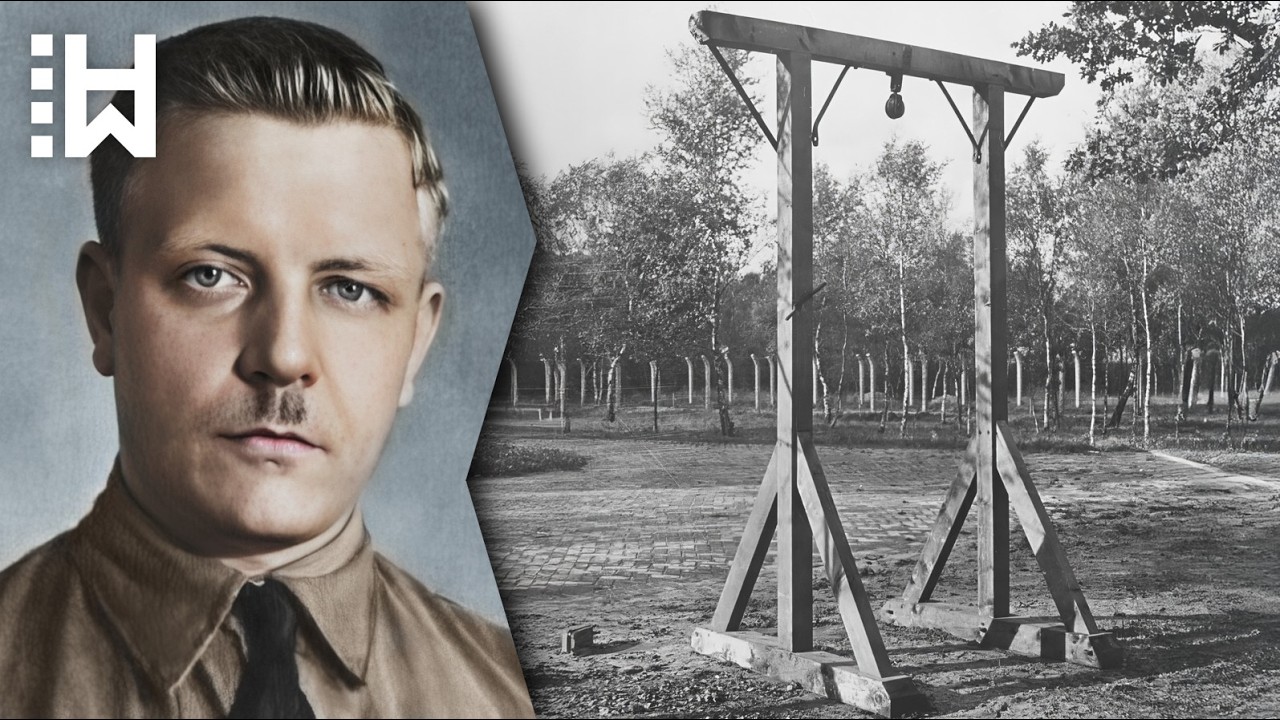
Wagner was born on January 12, 1899, in the small town of Algringen, today’s Algrange in France, then part of the German Empire. The son of a miner, he grew up in a devout Catholic family and entered a teacher training college in the summer of 1913. When the First World War broke out on July 28, 1914, the young student joined the Imperial German Army as a volunteer in 1917. In May 1918, Wagner was severely wounded and taken prisoner by the French.
After five escape attempts, he finally fled a prisoner-of-war camp disguised in a French officer’s uniform, returning to Germany via Switzerland in August 1919. From 1922 onward, Wagner became active in nationalist politics. He co-founded a local branch of the Nazi Party in the city of Bochum and became its first local group leader. After the party was banned following the failed Beer Hall Putsch in November 1923, he continued his activities in the Völkisch Social Block, a movement closely aligned with National Socialism.
When the Nazi Party was reestablished in 1925, Wagner rejoined and quickly advanced to district leader. By 1928, he was appointed Gauleiter, the regional party head, for Westphalia and became one of the first twelve Nazi deputies in the Reichstag, the German parliament. By 1932, Wagner had founded a weekly and a daily Nazi newspaper, as well as an academy for political training, helping to shape the ideological foundation of the Nazi movement in western Germany. After Hitler was appointed Chancellor on January 30, 1933, Wagner joined the SA, the Nazi paramilitary stormtroopers, with the rank of SA-Gruppenführer, equivalent to a major general.
In December 1934, following the removal of Helmuth Brückner, who had been accused of disloyalty and homosexual inclinations, Wagner was appointed Gauleiter of the province of Silesia, with its capital in Breslau, today the Polish city of Wrocław. Retaining his original post in Westphalia, Wagner became one of the few Nazi officials to lead two regions simultaneously. He also succeeded Brückner as Oberpräsident, or high president, of the Prussian provinces of Lower and Upper Silesia, uniting under his control both the highest political and governmental authority in the region. In October 1936, he was appointed Reich Commissioner for Pricing, responsible for controlling wholesale and retail prices across Germany, a position vital to the economic policy of Hermann Göring, the head of the German Air Force and director of the Four Year Plan.
Wagner decreed that after November 1936, no price increases would be allowed, but as shortages grew, he was forced to ease restrictions for industries dependent on imported resources. When the Second World War began with the Nazi invasion of Poland on September 1, 1939, large parts of the country were annexed, including East Upper Silesia, which was added to Wagner’s domain. Two days later, Wagner met Adolf Eichmann, one of the chief architects of the Holocaust. Eichmann presented the so-called Nisko Plan, a scheme to deport 70,000 to 80,000 Jews from annexed Polish territories to a remote area near the city of Lublin, where they would be concentrated in a brutal reservation.
Wagner agreed to cooperate, and the first deportations began in October 1939 from the city of Kattowitz. These deportations continued into early 1940, forcing Jews and Poles from their homes to make way for ethnic German settlers. Many deportees died from starvation, either during transport or while in the reservation. Additional deaths were caused by typhus and typhoid fever epidemics, the lack of housing, and the absence of any means of livelihood.
The majority of those who survived the initial ordeal would later die in Nazi death camps. Wagner, by virtue of his position, bore responsibility for their tragic fate. By 1941, Wagner stood at the height of his political career, but behind the facade of success, he had made powerful enemies among the most ruthless men of the Nazi hierarchy. Among them were Heinrich Himmler, head of the SS, and Martin Bormann, Hitler’s private secretary and chief of the Party Chancellery.
Both men despised Wagner. Himmler distrusted him for his independence and lack of fanaticism, while Bormann, a militant atheist, viewed Wagner’s open Catholic faith as a direct challenge to the ideological purity of the Nazi Party. Wagner was accused of maintaining ties with Catholic Action, an organization condemned by the regime for its opposition to National Socialist doctrine. He had also sent his children to Catholic schools, an act forbidden for senior party members.
Rumors spread that his wife had once knelt before the pope during a Vatican reception, an image that infuriated Hitler’s inner circle. The final pretext for Wagner’s downfall came from a private letter written by his wife to their pregnant daughter, in which she forbade the daughter’s planned marriage to an SS officer because he had renounced the church. Himmler obtained the letter and passed it to Bormann, who quickly brought it to Hitler’s attention. On November 9, 1941, during the annual commemoration of the failed Beer Hall Putsch in Munich, all Gauleiters were assembled.
In front of the gathered party elite, Hitler personally dismissed Wagner as Gauleiter. After Bormann read aloud Wagner’s wife’s letter, Hitler erupted in rage, publicly denouncing Wagner as disloyal and unworthy of his position. When Wagner attempted to speak in his own defense, Hitler ordered him to be silent, dismissed him from all positions, and demanded that he be removed from the hall immediately. Within days, Wagner was also expelled from the Reichstag.
On Hitler’s orders, Wagner was brought before the Supreme Party Court, headed by Walter Buch. Despite the pressure, Wagner mounted a vigorous defense, and in February 1942, the court acquitted him, declaring there were no formal grounds for expulsion. The decision enraged both Bormann and Hitler, who refused to accept it. The matter remained unresolved until the autumn of 1942, when Hitler summoned Buch to his headquarters, angrily scolded him, and demanded an immediate reversal.
That same day, Bormann wrote to Wagner, notifying him of his permanent expulsion from the Nazi Party. By October 1943, acting on Himmler’s instructions, the Gestapo placed Wagner under constant surveillance. Once one of Hitler’s most trusted regional leaders, he was now treated as a potential enemy of the state. By mid-1944, Germany was breaking apart under the weight of war, and opposition to Hitler was spreading within the army.
Many officers concluded that only Hitler’s removal could save the nation from total destruction. On July 20, 1944, Colonel Claus von Stauffenberg placed a bomb beneath a conference table inside the Führer’s headquarters, the Wolf’s Lair in East Prussia. The explosion killed four men but failed to kill Hitler, who escaped with minor injuries. The failed assassination triggered a brutal wave of arrests and executions across the Reich.
Wagner’s name appeared in a document found among the conspirators’ papers. It listed upright and capable individuals who might be convinced to support an overthrow of Hitler, mentioning specifically Gauleiter Wagner. Though there was no evidence of his participation, that single reference sealed his fate. In late July 1944, the Gestapo arrested Wagner and sent him to a concentration camp.
Later, he was transferred to the Gestapo headquarters on Prinz-Albrecht-Straße 8 in Berlin, where prisoners were interrogated and executed in secrecy. The exact circumstances of his death remain uncertain. The most widely accepted account holds that the 46-year-old Wagner was hanged by the Gestapo on April 22, 1945, just days before Soviet troops entered Berlin. A different account recorded by a fellow prisoner claims that Wagner survived until May 2, 1945, when Red Army soldiers liberated the prison.
According to this version, he was accidentally shot by a Russian soldier during the confusion of the liberation.