The specter of Stalingrad has forever haunted the annals of military history, but the name most closely intertwined with its doomed Sixth Army is often reduced to a footnote. While the tragedy of Friedrich Paulus is well documented, the story of his immediate superior, Field Marshal Maximilian von Weichs, remains a stark lesson in the peril of prophetic counsel falling on deaf ears. New historical examinations are shedding light on the Bavarian commander who saw the catastrophe coming with chilling clarity, only to be silenced by a dictator’s obsession.
Months before the Red Army’s pincers closed on November 23rd, 1942, von Weichs was not merely concerned; he was frantic. As the commander of Army Group B, he oversaw a sprawling, multi-national front stretching over 500 miles of unforgiving Russian steppe. His warnings to Hitler were not vague anxieties but detailed, data-driven assessments.
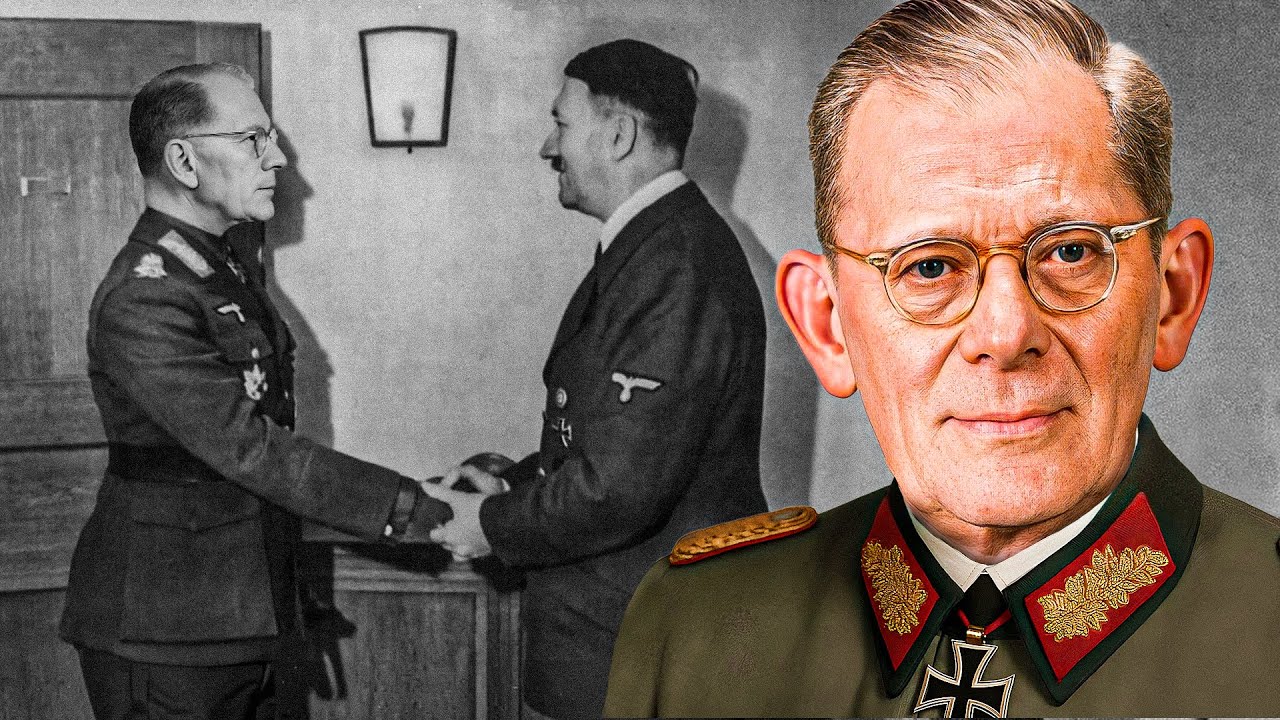 He identified the fatal flaw in the German position: the flanks guarding Stalingrad were held by under-equipped, demoralized Romanian and Italian divisions, stretched impossibly thin against a growing Soviet juggernaut.
The intelligence he presented was irrefutable. His reports, filed as early as November 3rd, pinpointed massive Soviet tank concentrations massing opposite the Romanian Third Army. Von Weichs noted that these divisions were defending frontages three times the size considered safe by German doctrine, and they lacked the anti-tank weapons to stop a modern armored assault.
He wasn’t asking for a miracle; he was begging for two things: either significant reinforcements to shore up the lines, or explicit permission to shorten his front, a strategic retreat that could have saved the Sixth Army.
Hitler’s refusal was absolute, rooted in a fatal blend of arrogance and strategic blindness. The Führer, having proclaimed to the world that Stalingrad would be taken, viewed any withdrawal as an unforgivable sign of weakness. The propaganda machine had already sold the victory, making the military reality of a precarious salient unacceptable to the Nazi leadership.
In the bunkers of East Prussia, the granular, desperate reports from the front were dismissed as the pessimism of a cautious aristocrat, a stark contrast to the “iron will” demanded of the Wehrmacht.
The tension between the two men was more than just a strategic disagreement; it was a fundamental clash of philosophies. Von Weichs, a product of the Prussian military tradition, believed in methodical planning, logistical security, and the conservation of force. He was a master of the operational art, as evidenced by his textbook performances in Poland and France.
Hitler, however, was a gambler, obsessed with territorial gains and the annihilation of the enemy, irrespective of the cost to his own forces. This philosophical chasm would prove fatal for the men trapped in the city on the Volga.
 The final, desperate warning came on November 18th. Field Marshal von Weichs reported heavy artillery probes and unusual Soviet radio traffic, predicting with terrifying accuracy a major breakthrough within twenty-four hours. His words were met with the same stone-cold order that had preceded every failed plea: “No retreat.”
It was a death sentence, pre-signed and delivered, for 250,000 German soldiers. Just hours later, at dawn, the silence was shattered by the thunder of thousands of Soviet guns, signaling the start of Operation Uranus, which would seal the Sixth Army’s fate.
As the Romanian lines disintegrated, von Weichs acted decisively on the ground. He immediately urged Hitler to authorize a breakout by the Sixth Army, arguing that a 48-hour window existed for Paulus to fight his way out to the west. It was a gamble, but one with a chance of saving a quarter of a million lives.
Yet even as the encirclement was complete, Hitler refused. Instead of a breakout, he demanded von Weichs mount a relief effort using the very same shattered forces that had just been routed, a logistical absurdity that cost the Germans their last, best chance.
Hitler then methodically stripped von Weichs of his power. His best armored divisions were transferred to Erich von Manstein, who was given a new command for a relief attempt that was doomed from the start. Von Weichs was left powerless, a commander in name only, watching as his prophetic warnings played out in a horrific, slow-motion tragedy.
He could only listen to the increasingly desperate radio pleas from the Sixth Army as it starved and froze in the pocket, betrayed by the very high command that had sent it there.
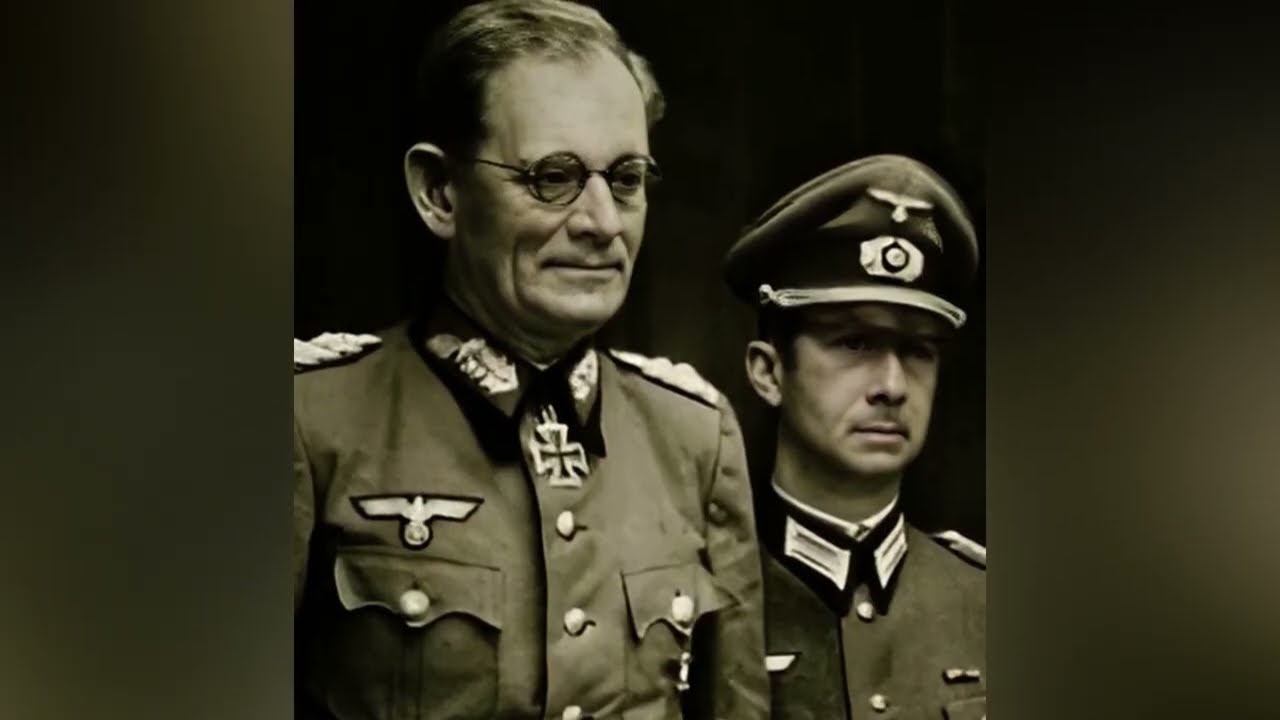 The final surrender on February 2nd, 1943, was a catastrophic end of an army, with over 90,000 men stumbling into Soviet captivity. For von Weichs, it was the end of his operational career in the East, a career marked by brilliance in maneuver warfare but forever stained by the disaster he had foreseen and was powerless to prevent. He was relieved of his command, though in a final irony, Hitler promoted him to Field Marshal on February 1st, a hollow honor for a man overseeing the wreckage of his command.
His career, however, was not over. In August 1943, Hitler reassigned him, shifting him from the vast armored fronts of the East to the brutal guerrilla war in the Balkans. As Commander-in-Chief of Army Group F, von Weichs transitioned from fighting a conventional war to overseeing a brutal occupation.
The methodical approach that had once defined his military genius now became bureaucratic efficiency in the service of terror. Under his command, the Wehrmacht conducted ruthless reprisals, executing hundreds of civilians for every German soldier killed by partisans, as per his own earlier orders from 1941.
The contrast between the operational commander and the occupation overlord is stark. In the Balkans, the war was not about maneuver but about control, suppression, and annihilation of resistance. Von Weichs, operating from his headquarters in Belgrade, directed campaigns against Tito’s partisans with a ruthless pragmatism that resulted in widespread atrocities.
His authority expanded to encompass all German troops in Hungary in April 1944, further stretching his depleted forces as the Red Army relentlessly pressed westward, turning the tables on the once-invincible Wehrmacht.
By autumn 1944, the German hold on the Balkans collapsed. Von Weichs organized a desperate retreat from Greece and Yugoslavia, a fighting withdrawal that marked the final, undignified end to his military service. He was formally retired on March 25th, 1945, mere weeks before the total surrender of the Third Reich.
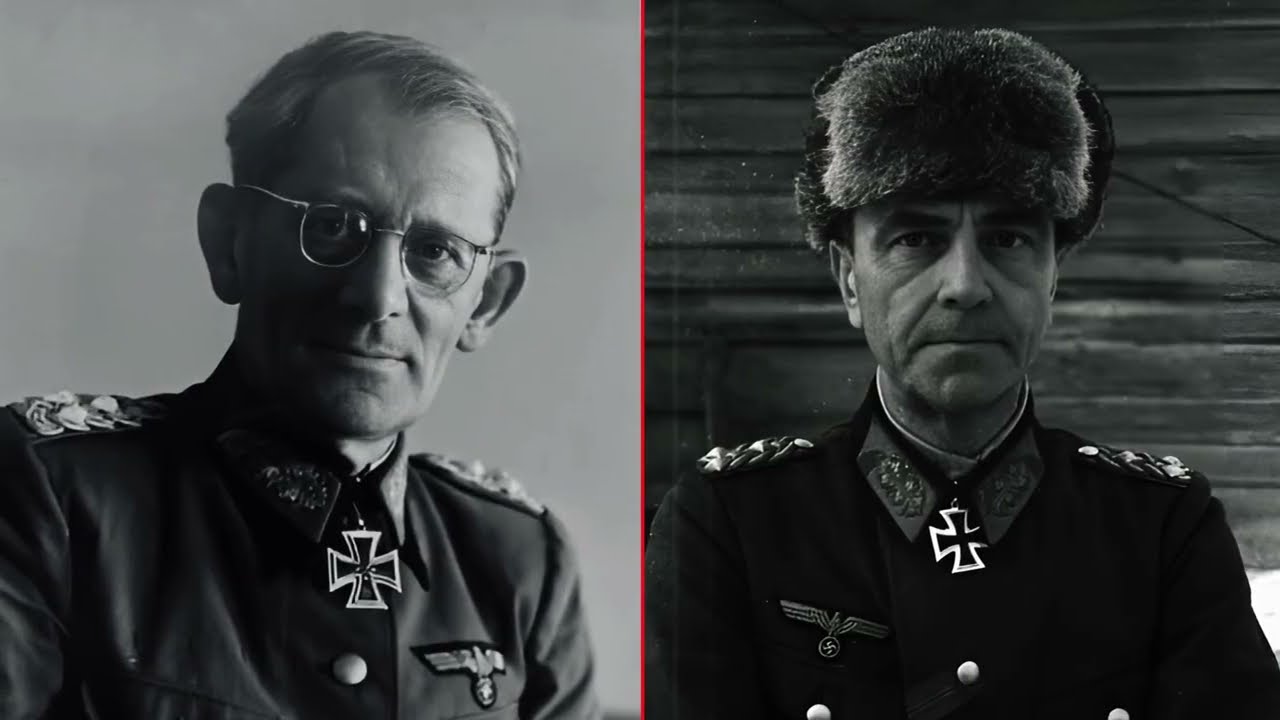 His transition from respected field commander to architect of brutal reprisals raises complex questions about moral responsibility, making him a far more ambiguous figure than a simple military genius.
With Germany’s fall, von Weichs was captured by American forces. He was subsequently charged with war crimes for the atrocities committed under his command in the Balkans, specifically named in the Hostages Trial alongside other senior officers. Yet, justice, in his case, was diverted.
Citing medical reasons, he was removed from the proceedings before testimony even began. He was released, leaving the full extent of his culpability for the starvation and massacre of civilians unexamined and unanswered, a quiet escape from accountability that denied history a full reckoning.
He died in relative obscurity in 1954, at the age of 72, near Bonn. His passing was noted by few. The death of the man who had once commanded over a million men was a whisper, a stark contrast to the public vilification of his contemporaries.
Instead of a Nuremberg verdict, he received only silence. The “overlooked Field Marshal” had, in the end, become a ghost of a bygone era, his warnings vindicated but his reputation sullied by the dark compromises of total war.
The long shadow of Stalingrad is complex, and von Weichs’s role in it remains a topic of intense debate among historians. His legacy is paradoxical: a master of mobile warfare whose greatest insight—the Pyrrhic nature of Hitler’s strategic demands—was ignored, and a moral leader who later enforced a repressive occupation. He is a figure defined not only by what he did, but by what he failed to prevent, and the brutal crimes he oversaw in Yugoslavia.
The story of Army Group B is a sobering study of the destructive synergy between a dictator’s blind ambition and a commander’s trapped obedience.