In a heart-wrenching case that has captivated and horrified the nation, the tragic death of two-month-old Cooper Harris has raised profound questions about parental responsibility and the darker aspects of human behavior. The events surrounding Cooper’s death in a sweltering SUV in June 2014 have sparked intense debates on ethics and accountability.
 Cooper Harris, born on February 24, 2012, was a vibrant child, full of curiosity and energy. His parents, Justin Ross Harris and Leanna Harris, lived in Marietta, Georgia, a seemingly peaceful suburban community. On June 18, 2014, a typical morning began with Leanna kissing her son goodbye as she left for work, while Ross was set to take Cooper to daycare. However, the day would take a tragic turn that would change their lives forever.
As the clock ticked toward 4:00 p.m., Leanna arrived at Cooper’s daycare, only to be met with a chilling revelation: her son had never been dropped off. Panic set in as she attempted to reach Ross, who was unresponsive. The unsettling realization that Cooper might have been left in the car began to surface. Leanna’s calm demeanor in the face of such distress became a focal point of scrutiny.

Ross had taken Cooper to Chick-fil-A that morning, a detail that would later come under investigation. Instead of dropping Cooper off at daycare, he drove to his workplace, leaving the toddler in the backseat of the locked vehicle. As temperatures soared to dangerous levels, the situation grew dire. Reports indicate that within just a short time, the interior of the car could reach life-threatening temperatures.
After a workday that lasted several hours, Ross returned to his car, seemingly unaware of the tragedy that had unfolded. It was only after he drove a mile away that he allegedly realized Cooper was still in the backseat. Witnesses described a chaotic scene as Ross called for help, yet his lack of immediate action raised eyebrows among those present.

As police arrived, they noted Ross’s emotional responses fluctuated dramatically, leading investigators to question his behavior. Initially perceived as a distraught father, his actions soon painted a different picture. Public opinion shifted as details emerged about Ross’s life, including his alleged infidelity and troubling online communications.
The investigation revealed a complex web of relationships and behaviors that suggested a deeper issue at play. Court documents later highlighted Ross’s use of an anonymous messaging app on the day of Cooper’s death, where he expressed dissatisfaction with his marriage and fatherhood. This revelation, coupled with the discovery of his online interactions, painted a troubling portrait of a man living a double life.
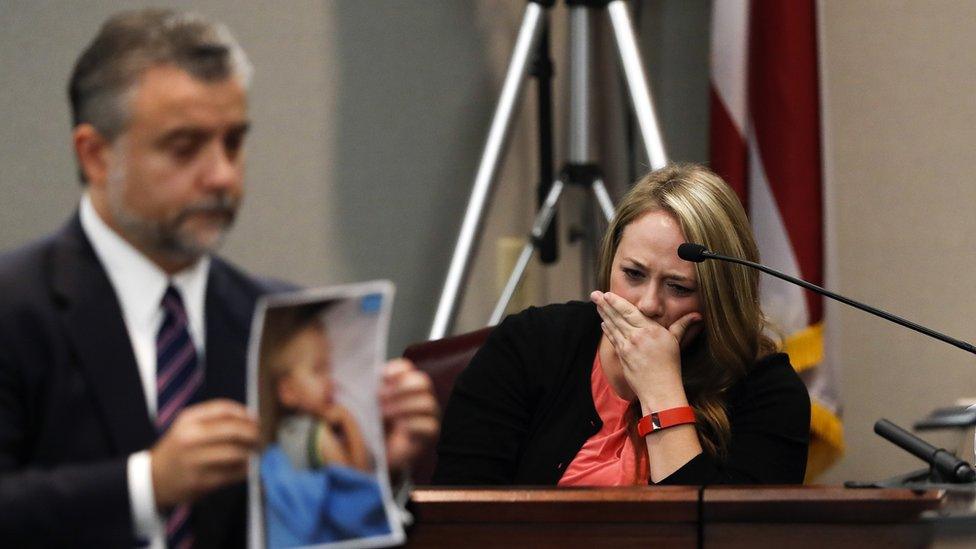
In the courtroom, the prosecution argued that this was not merely a tragic accident but a case of negligence intertwined with a darker intent. After 26 days of testimony, the jury found Ross guilty on multiple counts, including the most serious charge related to Cooper’s death. He was sentenced to life in prison, plus an additional 32 years.
The case of Cooper Harris stands as a haunting reminder of the fragility of childhood and the responsibilities that come with parenthood. As discussions continue around the implications of this tragic event, one question lingers: how can society better protect its most vulnerable members from similar fates in the future?


