The House With the Number 666

Part 1

Michael Harrow had seen the house long before he bought it. Not in a listing. Not in a newspaper. Not while driving through town. He had seen it in his dreams for ten years, always the same way: a narrow gray house under heavy rain, one upstairs window glowing yellow, and the number 666 nailed crookedly beside the front door. In every dream, he stood outside in the cold, unable to move, while someone whispered from behind the door, “You’re late.”

At first, Michael told nobody. He was thirty-four, practical, tired, and not the kind of man who believed dreams meant anything. But the dream kept returning whenever his life was about to change. He dreamed it before his father died. He dreamed it before losing his job. He dreamed it the night his engagement ended. Each time, the house looked closer. Each time, the whisper sounded more impatient.

When he finally bought a home in a quiet town outside Cleveland, he thought the nightmares would end. The place was cheap, old, and strangely available, but he convinced himself luck had finally turned in his favor. The agent said the previous owner had moved suddenly and wanted a quick sale. Michael did not ask too many questions. He only wanted somewhere silent.

On moving day, he parked in the driveway and stared at the house. For one second, his heart seemed to stop. The gray walls. The narrow porch. The upstairs window. It was not raining, but everything else was exactly as he had dreamed.

Then he saw the address plate.

666.

Michael laughed once, dry and nervous. “No,” he whispered. He checked the papers again. The address was correct. He stood on the porch for several minutes before unlocking the door. Inside, the house smelled of dust, old wood, and something faintly sweet, like flowers left too long in water.

That first night, Michael slept on a mattress in the living room. At 3:00 AM, he woke to knocking.

Not at the door.

Inside the wall.
Three slow knocks came from behind the plaster near the staircase. Michael sat up, holding his breath. The knocking came again, lower this time, as if someone were moving downward behind the wall.

The next morning, he blamed pipes. Old houses made sounds. He repeated that sentence until he almost believed it. But while unpacking in the upstairs bedroom, he noticed one floorboard near the closet was loose. When he pried it open, he found a sealed envelope hidden underneath.

Inside was an old photograph.

It showed the house decades earlier, black and white, with a family standing on the porch. A mother. A father. A little girl. And in the upstairs window, behind the curtain, stood a boy who looked exactly like Michael as a child.

Michael dropped the photo.

He had never been in that house before. He had not even grown up in that state.

On the back of the photograph, written in faded ink, were six words:

He always comes back at thirty-four.

Michael did not sleep the next night. He sat in the kitchen with every light on, staring at the photograph. At 2:59 AM, the lights flickered. At 3:00 AM, the knocking began again. This time, it came from the basement door.

Then a child’s voice whispered from the other side.

“Michael… you’re late.”

Part 2

Michael called a contractor the next morning and asked him to inspect the basement. The man arrived cheerful, carrying tools and coffee, but his mood changed the moment he saw the door. He asked how long Michael had lived there. Michael said two days. The contractor nodded slowly and said, “Then you still have time.”

Michael grabbed his arm. “Time for what?”

The contractor would not answer. He only said the previous owner had covered the basement wall with new panels before selling the house. “People don’t hide clean walls in old basements unless something behind them is worse.”

They went downstairs together. The basement was colder than the rest of the house. Against the far wall, behind stacked boxes left by the previous owner, they found a section of paneling that did not match. The contractor pulled it away.

Behind it were names.

Dozens of names scratched into the concrete.

Each name had an age beside it.

Every age was 34.

Michael stepped closer, barely breathing, until he found the last name at the bottom.

MICHAEL HARROW — 34

The contractor whispered, “I’m leaving.”

Before Michael could stop him, the basement door slammed shut above them. The lights went out. In the dark, something knocked from inside the concrete wall. Three slow knocks.

Then the child’s voice came again, no longer behind the basement door, but directly beside Michael’s ear.

“You found the list.”

The contractor screamed. Michael felt him rush past in the dark, pounding up the stairs. The basement door opened suddenly, though no one touched it. The contractor ran outside and never returned. Michael stood frozen below, staring at the wall as the lights flickered back on.

One name had changed.

His own.

The scratched letters were wet now, as if freshly carved.

That evening, Michael searched town records. The house had been built in 1906. Six owners had died there. All men. All thirty-four. Every death was listed differently: fall, fever, accident, heart failure, disappearance. But one detail connected them. Each man had reported dreams about the house before moving in.

Michael found the previous owner’s name: David Keller. Still alive. He tracked him to a motel three towns away and drove there immediately.

David opened the door with a chain still latched. He looked older than his file photo, pale and hollow-eyed. When Michael said the address, David tried to shut the door. Michael begged him.

“I saw my name in the basement.”

David stopped.

He let Michael in and told him the story. The number was not just an address. It was a marker. The house did not belong to the people who bought it. It chose them. Every man who moved in at thirty-four had once appeared in an old photograph hidden somewhere in the house. David had found his own photo too. He survived only because he left before the seventh night.

“What happens on the seventh night?” Michael asked.

David looked at him with pity. “The house remembers where it put you.”

Michael drove back, planning only to grab his keys and leave. But when he entered, the house was different. The hallway seemed longer. The windows showed rain, though outside the sky was clear. From upstairs came the sound of a child laughing.

Michael ran for the front door.

It would not open.

At 3:00 AM, every light died.

A yellow glow appeared upstairs.

Michael turned slowly and saw a little boy standing on the staircase. The boy looked exactly like him at seven years old. In one hand, he held the old photograph. In the other, he held a rusted nail.

“You left me in the picture,” the child whispered.

Michael backed away. “Who are you?”

The boy smiled. “The first Michael.”

The walls began to knock. Not once. Not twice. Hundreds of knocks, from every room, every floor, every hidden space. The house shook with them. Then the basement door opened by itself.

On the stairs below, a line of men stood in the darkness. Pale faces. Hollow eyes. All thirty-four. All waiting.

Michael understood then. The house did not kill its owners. It copied them. Trapped one version inside and let the next version live until it came back.

He grabbed the rusted nail from the child’s hand and drove it into the address plate beside the front door. The number 666 cracked down the middle. The house screamed—not with one voice, but with many.

The door burst open.

Michael ran into the street just as the windows shattered behind him. When police arrived, the house was silent. The basement wall was blank. No names. No photos. No proof.

But Michael never bought another home.

Years later, he received an envelope with no return address. Inside was a new photograph of the gray house. The address plate had been repaired.

And in the upstairs window stood a man who looked exactly like Michael.

Only older.

On the back, someone had written:

You are late again.
13 July 2026

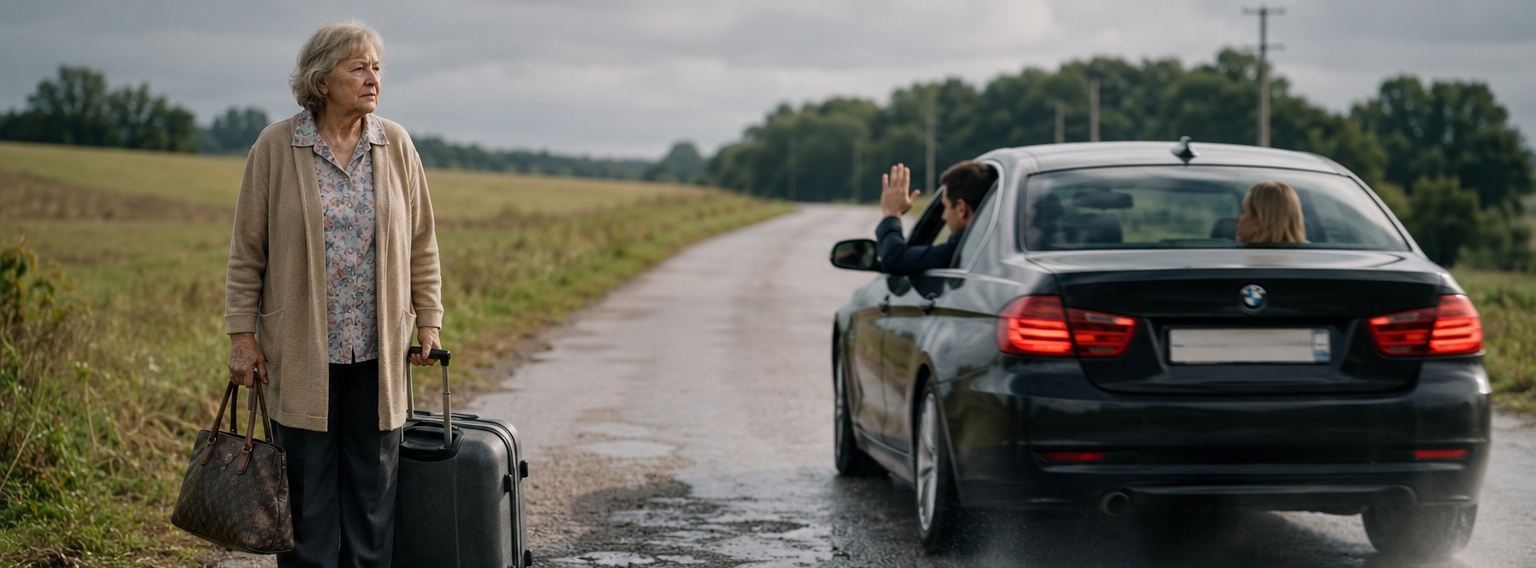
Meine Kinder setzten mich nach der Beerdigung ihres Vaters an einer Landstraße aus, um unseren Obstgarten für sieben Millionen Euro zu verkaufen – doch sie wussten nicht, dass das wertvollste Land immer mir gehört hatte

Ich heiße Anna Müller, bin achtundsechzig Jahre alt und war bis vor wenigen Wochen vor allem eines: Ehefrau, Mutter und Mitbesitzerin eines Obstbetriebs, den mein Mann Heinrich und ich über vier Jahrzehnte aufgebaut hatten. Unser Hof lag am Rand von Feldkirchen, umgeben von Apfelbäumen, Birnenreihen und einer alten Scheune, deren Balken Heinrich jeden Winter selbst … Read more

13 July 2026

Lo schiaffo arrivò così in fretta che non ebbi il tempo di reagire. Un attimo prima stavo prendendo un piatto alla cena di mio figlio, un attimo dopo il mio orecchino scivolava sul pavimento e il palmo della mano di sua moglie Sofia mi bruciava ancora sulla guancia. Nessuno si mosse. Né Paolo. Né gli eleganti ospiti. Mi guardavano, io, la vecchia invisibile in cucina, come se me lo meritassi. Non piansi. Non dissi nulla. Presi solo la mia borsa e uscii nella fredda notte del Lago di Como. Ma quello che Sofia non sapeva, quello che nessuno di loro sapeva, era che la loro villa perfetta, il loro studio di design, tutta la loro vita dorata, poggiavano su fondamenta firmate con il mio nome. E prima ancora che finissero il dessert, il loro mondo era già crollato.

**Lucia Ricci – Le fondamenta invisibili** La cena era asciutta, ma il vino scorreva generoso, mentre Sofia serviva il vassoio attorno al tavolo. Rideva un po’ troppo forte per qualcosa che Paolo aveva detto, inclinandosi abbastanza da fingere che io non esistessi. Allungai la mano per prendere un piatto e inavvertitamente sfiorai la sua spalla. … Read more

13 July 2026

Meine Schwiegertochter lud mich nicht zur Hochzeit ein, erwartete aber trotzdem 15.000 Euro von mir – dann erinnerte ich sie daran, wem das Haus wirklich gehörte

„Wann ist eigentlich eure Hochzeit?“, fragte ich an einem Dienstagmorgen und stellte meine Tasse auf den Küchentisch. Ich hatte die Frage ganz harmlos gemeint, denn seit Wochen lagen Hochzeitsmagazine herum, Nadine telefonierte ständig mit Floristen, und mein Sohn Lukas verschwand immer wieder mit Unterlagen aus dem Haus. Meine Schwiegertochter hob nicht einmal den Blick von … Read more

13 July 2026

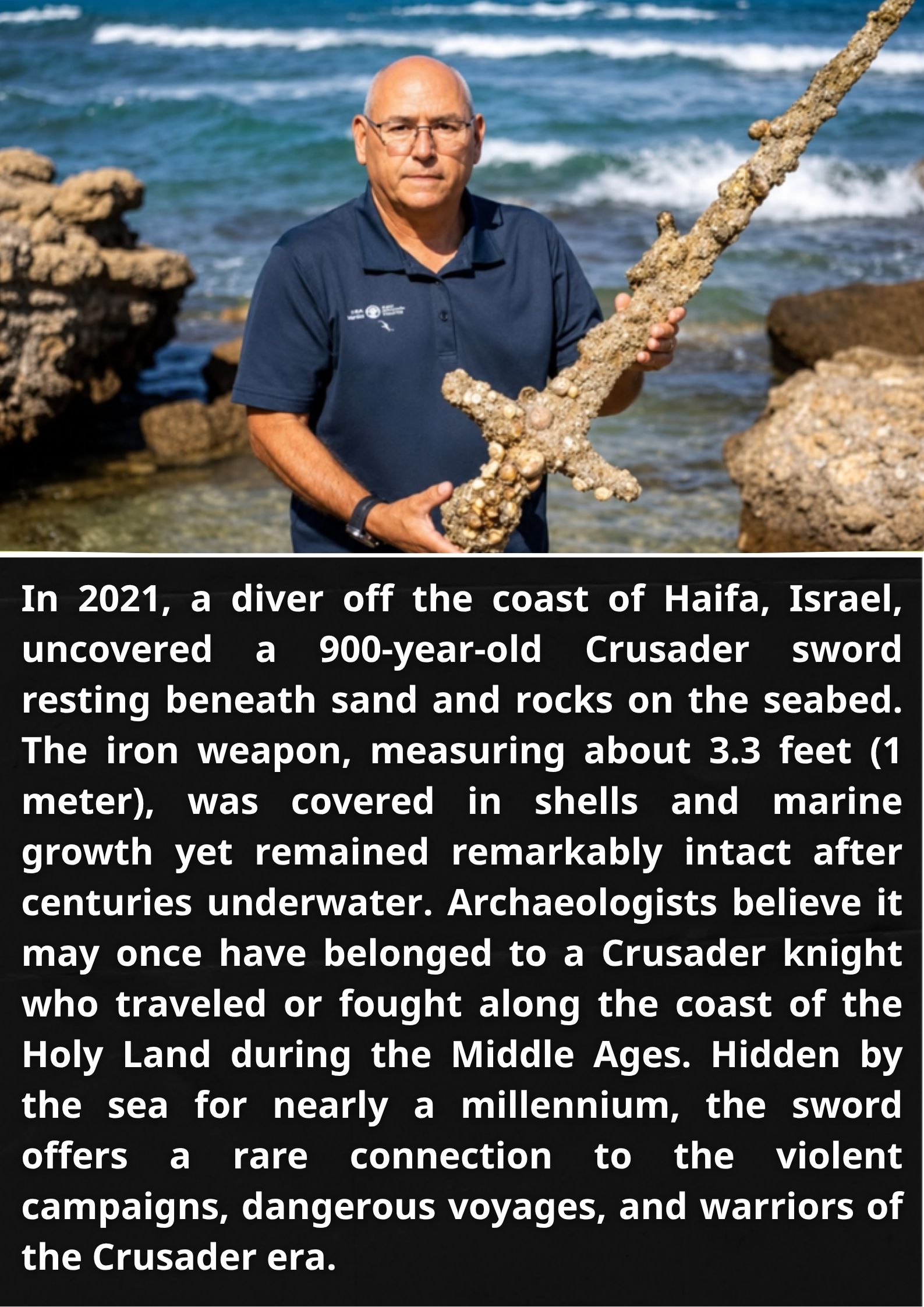
The Crusader Sword Beneath the Mediterranean: A 900-Year-Old Weapon Returns from the Sea

A remarkable piece of medieval history has emerged from the depths of the Mediterranean Sea off the coast of Israel. Resting beneath layers of sand, shells, and marine sediment for nearly nine centuries, a one-meter-long iron sword believed to have belonged to a Crusader knight was discovered by a recreational diver exploring the seabed. The find offers a rare and dramatic connection to the soldiers, pilgrims, sailors, and merchants who crossed these waters during one of the most turbulent periods of the Middle Ages.Israeli Diver Discovers 900-Year-Old Crusader Sword in Mediterranean

The weapon was not found in a museum, tomb, or ruined fortress. It lay underwater, hidden in a natural cove where ships may once have anchored during dangerous journeys along the eastern Mediterranean coast. The sword was heavily covered with marine organisms and hardened deposits, creating a rough outer layer that almost completely concealed its original shape. Yet beneath that crust, the structure of the weapon remained surprisingly intact.

This natural covering may have helped protect the sword from further damage. Iron usually deteriorates quickly in salt water, especially over such a long period. However, when an object becomes buried beneath sediment and sealed from constant exposure to oxygen and strong currents, the rate of corrosion can sometimes slow. In this case, shells, sand, and mineral deposits formed around the blade, preserving the outline of a weapon that might otherwise have disappeared entirely.

The diver reportedly noticed the sword after shifting sands revealed part of it on the seabed. Underwater archaeological sites are constantly changing. Storms, waves, currents, and seasonal movement of sand can cover objects for hundreds of years and then suddenly expose them. A sword invisible one year may appear the next, only to be buried again within weeks. This makes accidental discoveries by divers especially important, but it also means that newly exposed artifacts can be extremely vulnerable.

Once the sword was reported, archaeologists from the local antiquities authority took control of the object. Recovering such a weapon is only the beginning of a long and delicate process. After centuries underwater, the metal can become unstable when exposed to air. If dried or cleaned too quickly, the sword could crack, flake, or suffer irreversible damage. Conservators must remove salt and sediment gradually while stabilizing the iron beneath.

The restoration process may take months or even years. Specialists often use controlled baths, careful mechanical cleaning, chemical treatment, and detailed imaging to understand what remains under the marine crust. X-rays or other scanning methods can reveal the shape of the blade, hilt, and internal structure without immediately removing all the deposits. Every step must be recorded because the layers around the sword may contain valuable clues about how and where it was lost.A 900-year-old Crusader sword was discovered by an Israeli scuba diver off  the Haifa coast : r/BeAmazed

Archaeologists believe the weapon dates to the 11th or 12th century, during the period of the Crusades. These military campaigns brought large numbers of European knights, soldiers, clergy, pilgrims, and settlers to the eastern Mediterranean. Ports along the coast of the Holy Land became vital entry points for men, supplies, horses, weapons, and trade goods.

The sea route was essential. Traveling overland from Europe was long, expensive, and dangerous. Ships carried Crusaders from ports in Italy, France, and other parts of the Mediterranean toward cities such as Acre, Caesarea, and Jaffa. Natural coves offered temporary shelter when weather conditions became difficult or when ships needed to unload passengers and cargo.

The presence of ancient stone and metal anchors near the sword supports the idea that the area once served as a maritime refuge or anchorage. Ships may have waited there before continuing north or south along the coast. The cove could have been used repeatedly over centuries, leaving behind equipment, cargo, weapons, and personal possessions lost during storms, accidents, ship repairs, or military activity.

The sword itself appears to have been a serious battlefield weapon rather than a decorative object. Its length, weight, and hilt design suggest it was made for trained use. A professional-quality sword was expensive and valuable. It required skilled metalworkers, carefully forged iron, and a design balanced for combat. Such a weapon would likely have belonged to a knight, experienced soldier, or person of considerable rank.

For a Crusader warrior, a sword was more than a tool. It represented status, authority, training, and personal identity. Knights often relied on swords in close combat after using lances, bows, or other weapons. The sword could also carry symbolic meaning, especially during an age when religion, warfare, and social rank were deeply connected.

What remains unknown is how the weapon reached the seabed. It may have fallen overboard while a ship was anchored. It could have been lost during a storm, a maritime accident, or a sudden attack. The owner may have dropped it while boarding or leaving a vessel. Another possibility is that the sword sank with a damaged ship whose wooden structure later decayed, leaving only heavier objects scattered across the bottom.

The mystery of the missing knight is one of the most compelling aspects of the discovery. No name survives on the visible surface, and no written record directly identifies the owner. The sword does not tell us whether its final bearer was a wealthy nobleman, a professional soldier, or a Crusader arriving in the Holy Land for the first time.

Perhaps the warrior survived the loss and continued his journey without it. Perhaps the sword disappeared during an event that also claimed his life. The sea preserves objects but often erases the stories of the people who carried them.

This is what makes underwater archaeology so powerful. A single artifact can open a window into an entire historical world. The sword connects the modern coastline of Israel to medieval ships, religious expeditions, military campaigns, and the movement of people across the Mediterranean. It reminds us that history did not unfold only in castles and battlefields. It also happened in harbors, on ships, and along dangerous sea routes.

The Mediterranean seabed is filled with layers of human activity. Ancient anchors, amphorae, coins, weapons, tools, and shipwreck remains lie beneath its waters. Some objects date to the Bronze Age, while others belong to the Roman, Byzantine, Islamic, Crusader, Ottoman, and modern periods. Together, they form an underwater archive of trade, conflict, travel, and technological change.

Unlike a traditional museum, however, this archive is difficult to access and constantly at risk. Natural forces can expose or destroy artifacts. Illegal collecting and careless removal can erase archaeological context. An object recovered without its exact location, depth, and surrounding evidence loses much of its historical meaning. For this reason, cooperation between divers and archaeologists is essential.

The Crusader sword is valuable not simply because it is old or visually dramatic. Its true importance lies in the information it may provide. The metal composition could reveal where it was produced. The shape of the hilt may help specialists compare it with known European sword types. Traces of wood, leather, or decoration could survive beneath the deposits. Even the marine growth attached to it may help researchers understand how long the sword remained exposed before burial.

Once conservation is complete, the weapon may eventually be displayed to the public. If so, visitors will see more than a medieval blade. They will be looking at an object that crossed centuries beneath the sea, protected by the same waters that once carried Crusaders toward the Holy Land.

The sword’s survival is almost as extraordinary as its discovery. For nearly 900 years, it remained hidden while empires rose and fell, coastlines changed, and generations passed above it. Then, through a chance movement of sand and the sharp eye of a diver, it returned to the human world.

Its owner remains unknown. Its final battle, voyage, or accident may never be explained. Yet the weapon still speaks through its material, shape, and location. It is a silent witness to a violent and complex age—and a reminder that the ocean floor remains one of the largest unexplored museums on Earth.

13 July 2026

Mein Sohn warf mich aus dem Haus, das ich mitfinanziert hatte – doch er hatte ein entscheidendes Detail vergessen

TEIL 1: Mein Sohn warf mich aus dem Haus, das ich mitfinanziert hatte – doch er kannte die Wahrheit über die Eigentumsurkunde nicht „Wir haben keinen Platz mehr für dich.“ Mein Sohn Jonas sagte diesen Satz in der weißen Küche seines neuen Hauses, als würde er mich lediglich bitten, das Salz weiterzureichen. Neben ihm stand … Read more

13 July 2026

PART 2: At Christmas Dinner, My Son Took My Chair and Said, “That Seat’s for My Father-in-Law. Move.”

The following morning, I found my blood pressure medication sitting beside the coffee maker. I stopped in the kitchen doorway. I never left my medicine there. I kept every prescription inside the locked box in my bedroom. Yet the bottle stood in plain sight, exactly where Bernice knew someone might notice it. She entered behind … Read more

13 July 2026