The Shackled Dead of Phaleron: The Mystery of 80 Men Buried Outside Ancient Athens

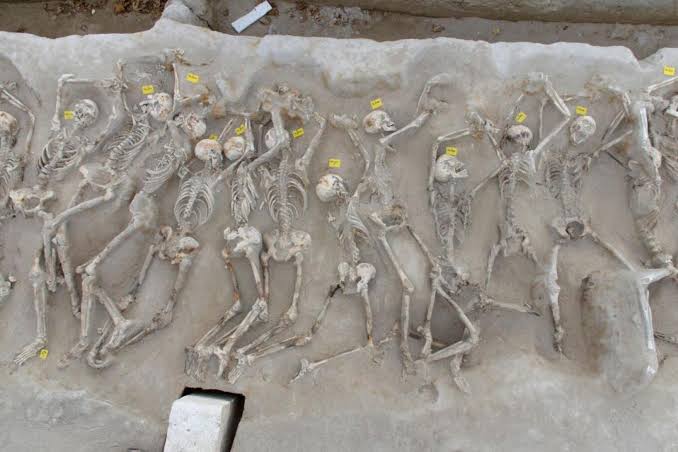
Beneath the modern southern coastline of Athens, archaeologists encountered one of the most haunting burial discoveries associated with ancient Greece. At Phaleron, the port used by Athens before the rise of Piraeus, excavators uncovered a group of approximately 80 male skeletons placed side by side in mass graves. Their orderly arrangement was disturbing enough, but the presence of iron restraints transformed the discovery into evidence of a possible mass execution. Thirty-six of the men were reportedly still shackled, while many had been positioned with their restrained arms raised above their heads.The Shackled Men of Phaleron: This is what the space that will host the  major archaeological find will look like – Photos - ProtoThema English
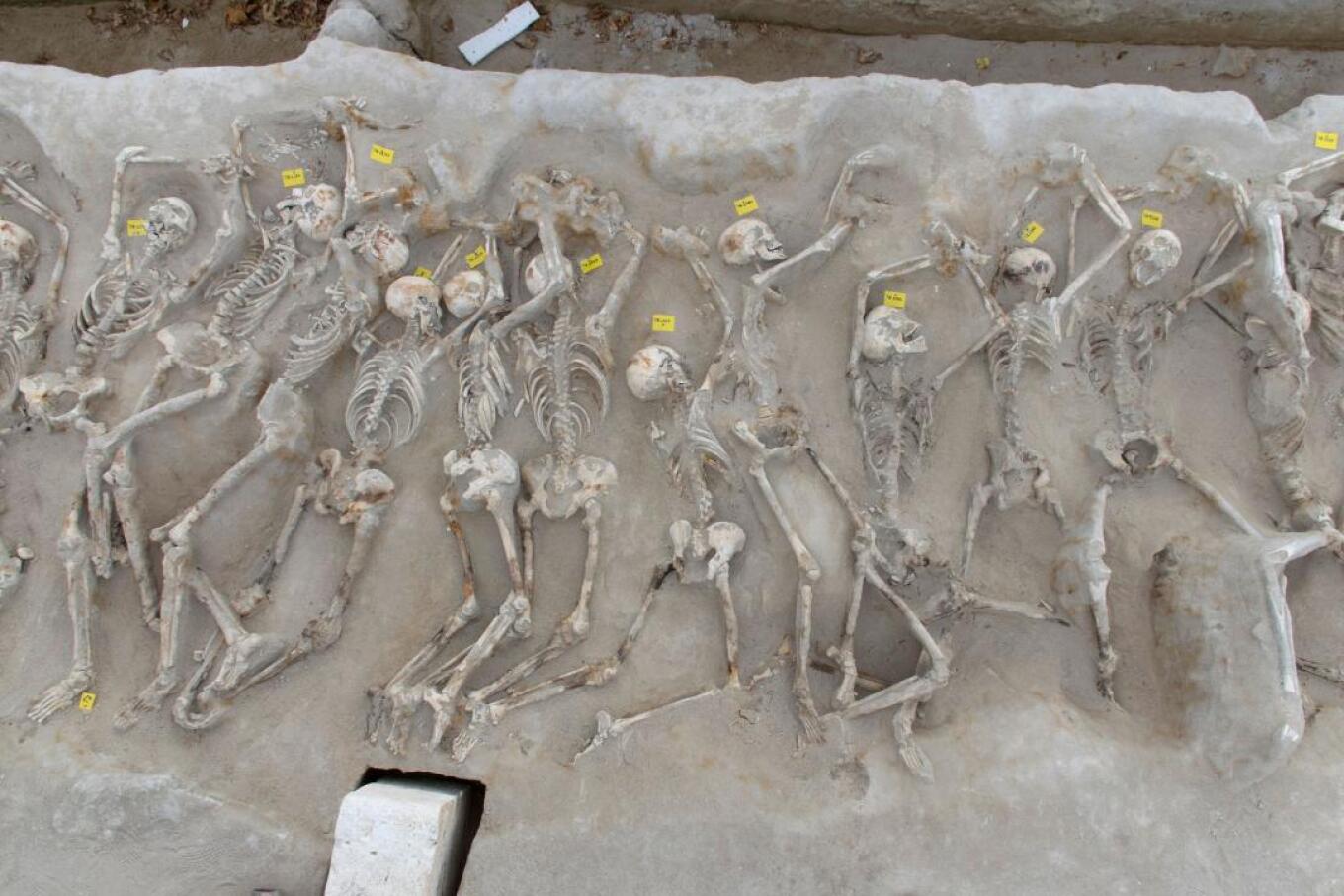
The remains were found within the large cemetery of the Faliron Delta, an archaeological landscape containing around 1,500 burials from different periods. The group attracted international attention in 2016, when details of the unusual burial became widely known during work connected with the Stavros Niarchos Foundation Cultural Center, near the sites of the Greek National Opera and National Library.

The men were buried in rows rather than thrown together carelessly. Some lay on their backs, while others were positioned face down. Iron restraints remained around the wrists of many individuals, and at least one body reportedly showed evidence that the legs had also been tied. The positioning of the arms above the head remains especially puzzling because captives are more commonly imagined with their hands secured behind their backs.Mass grave discovered in ancient Greek cemetery filled with EIGHTY  skeletons, Athens

Examination of the skeletons suggested that many of the dead were young men who had been in relatively good health before their deaths. Their teeth were generally well preserved, and the bodies did not display the patterns expected from a population weakened by prolonged illness or famine. This strengthened the theory that they were prisoners or political captives killed during a single violent event.

The graves have been dated broadly to the 7th century BC, with some reports placing the burial around 650–625 BC. This was a turbulent period in the history of Athens, long before the city became famous for democracy, philosophy, and its Classical monuments. Power was concentrated among aristocratic families, and political disputes could end in exile, betrayal, or execution.

One historical episode has repeatedly been proposed as a possible explanation: the attempted coup of Cylon. Cylon was an Athenian nobleman and celebrated athlete who tried to seize control of Athens during the 7th century BC. Ancient accounts describe how he and his supporters occupied the Acropolis but were surrounded when the attempt failed.

Cylon escaped, but many of his followers sought protection at a sacred place, reportedly believing that religious sanctuary would spare them. According to later traditions, they were persuaded to leave and were then killed. The incident became notorious because their execution was seen as a violation of sacred protection and was remembered as a stain upon the powerful Alcmaeonid family.80 shackled skeletons found in ancient mass graves – The History Blog

Because the Phaleron prisoners lived during approximately the same historical period, some archaeologists have wondered whether the shackled men could have been supporters of Cylon. The possibility is compelling: a failed political uprising, captured young men, a collective execution, and a burial outside the center of Athens. Yet the connection remains a hypothesis rather than an established identification. No surviving inscription names the dead, and the archaeological dating is not precise enough by itself to prove that they belonged to Cylon’s rebellion.

Other explanations remain possible. The men could have been pirates, enslaved captives, foreign enemies, condemned criminals, or participants in another political conflict no longer recorded in surviving texts. Ancient written history preserves only fragments of the violence that shaped early Athens, and many executions would never have been described by later historians.

The orderly character of the burial raises additional questions. Although the men appear to have suffered violent restraint, their bodies were not simply abandoned. Someone placed them in rows and covered them with earth. That organization suggests an official or controlled event, possibly carried out by authorities rather than an uncontrolled massacre.

The shackles themselves are among the most important pieces of evidence. Iron restraints were costly objects and would not necessarily have been left with the dead without reason. Their presence may indicate that the bodies were buried quickly, that removing the restraints was considered unnecessary, or that the shackles were intentionally retained to mark the status of the victims even in death.

The position of their arms may also preserve information about the execution. They could have been tied before being forced into the grave, restrained during transport, or arranged after death. Archaeologists must study joint positions, iron corrosion, soil movement, and skeletal damage to reconstruct the sequence accurately. What appears dramatic in photographs may have been altered slightly by pressure and decomposition over centuries.

Modern scientific analysis offers several possible paths toward understanding the group. DNA studies may reveal whether the men were biologically related. Isotope analysis of teeth and bones can indicate whether they grew up in Athens or came from distant regions. Evidence of trauma may help determine how they died, while nutrition and disease patterns could clarify their social background.

If many were nonlocal, the prisoners may have been foreign fighters or captives. If they shared family relationships, they might have belonged to the same political or social faction. If they were local but unrelated, the grave could represent a broader purge involving young men from different Athenian households.

The Phaleron cemetery is valuable because it preserves the lives of people often absent from ancient literature. Classical texts usually focus on rulers, generals, lawmakers, and elite families. Cemeteries reveal a wider society that included laborers, children, prisoners, foreigners, and people who died without leaving their names in written history.

The shackled men occupy an uncomfortable space between archaeology and political memory. They lived before the democratic Athens celebrated by later generations. Their grave is a reminder that the city’s political development was not peaceful or inevitable. It emerged from generations of aristocratic rivalry, social instability, attempted seizures of power, and acts of violence.

As conservation and research continue, the skeletons may eventually reveal more about their origins and deaths. Yet even advanced science may never attach individual names to them or identify the command that condemned them.

What remains certain is the scene preserved beneath the soil: dozens of young men, aligned in rows, many still carrying iron restraints. They were buried together during a dangerous chapter of early Athenian history, leaving behind no written testimony.

Their shackles survived when their voices did not. More than 2,600 years later, the silent dead of Phaleron continue to ask the same question: who feared them enough to bind and execute them—and why?
15 July 2026

The Burning Sky: Colin Kelly’s Final Flight

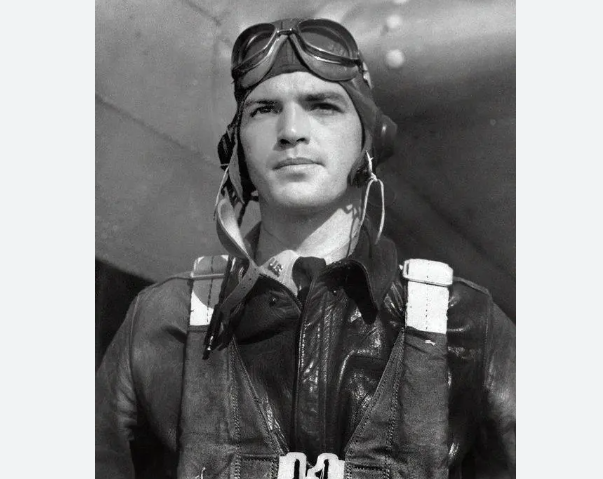
Three days after Pearl Harbor, America was still in shock. Families sat close to their radios, listening to reports they could barely believe. Ships had burned. Men had died. The country had been pulled into a war that suddenly felt close to every home, every town, every kitchen table. Across the Pacific, young pilots climbed into planes knowing that history had changed overnight, and one of those men was Captain Colin Kelly.

Kelly was not looking for fame. He was a husband, a father, a soldier, and a pilot who understood that orders did not wait for fear to pass. He had trained for dangerous missions, but nothing could fully prepare a man for the early chaos of war, when information was scattered, enemy movements were uncertain, and every flight could be the last. Still, when the call came, Kelly and his crew climbed aboard their B-17 Flying Fortress and took to the sky.

Their mission carried them over dangerous territory, where Japanese forces were advancing and American defenses were under enormous pressure. The B-17 was a powerful aircraft, but power did not make it invincible. In the sky, metal could burn, engines could fail, and one burst of enemy fire could turn a mission into a desperate fight for survival. Kelly knew this. So did every man sitting inside that aircraft.

As they approached their target area, tension filled the plane. The crew searched the sea below, watching for enemy ships. Every second mattered. Every movement had to be calm, precise, and disciplined. Then the moment came. Kelly brought the bomber into position and launched an attack against a Japanese warship. In those early days, when America desperately needed proof that it could strike back, the mission carried a weight larger than the men inside the plane could possibly know.

But war rarely gives heroes a clean ending.Captain Colin Kelly USAAC: America's First World War Two Hero

Soon after the attack, Kelly’s B-17 was hit. The aircraft began to fail. Flames and damage spread through the bomber. The sky that had carried them moments before became a trap. Inside the plane, the crew faced the nightmare every airman feared: a burning aircraft, losing control, high above the earth, with only seconds to decide who might live.

Kelly understood the truth immediately. The plane was going down. He also understood something else: if he abandoned the controls too soon, his men might not have enough time to escape. A pilot’s instinct is to fight the aircraft, to hold it steady, to buy one more second, then another. And in those seconds, lives can be saved.

He ordered his crew to bail out.

One by one, the men moved toward survival. But survival was not simple. The plane was shaking, burning, and falling. Every man who escaped did so because someone remained behind long enough to keep the aircraft from becoming complete chaos. That man was Colin Kelly. He stayed at the controls while his crew jumped, holding a dying bomber in the air with everything he had left.

There was no applause in that moment. No newspaper headline. No medal ceremony. Only fire, smoke, noise, and a young pilot choosing duty over his own chance to live. Kelly had a family waiting somewhere far away. He had a future that should have been longer. He had every human reason to save himself. But his crew needed time, and he gave it to them.

Moments after the last chances had been spent, the B-17 exploded.

The blast ended Colin Kelly’s life, but it did not end his story. News of his sacrifice spread across a wounded nation that was searching for courage in the darkness after Pearl Harbor. His face appeared in newspapers. His name was spoken in schools, homes, churches, and military bases. Children wrote letters to his family. People who had never met him mourned him as if they had lost someone of their own.

To Americans at that time, Colin Kelly became more than a pilot. He became proof that courage still existed when the world seemed to be falling apart. He represented the kind of bravery that does not shout, does not boast, and does not ask who is watching. It simply acts when others need saving.

Yet, like many early war heroes, his name slowly faded as the conflict grew larger. New battles came. New headlines appeared. More men sacrificed everything. The war moved forward, and history became crowded with names. But fading from public memory does not make a sacrifice smaller. It only means the story must be told again.

Colin Kelly’s final flight matters because it reminds us what heroism often looks like in its purest form. It is not always victory. It is not always survival. Sometimes it is a man in a burning plane, keeping his hands on the controls because others still have a chance. Sometimes it is choosing to be last when every instinct screams to be first. Sometimes it is knowing that you may not make it home, but making sure someone else does.

His crew lived because he stayed.

That is the heart of the story. Not the headlines. Not the fame. Not even the title of America’s first hero of World War II. The heart of the story is a final decision made in the sky, under fire, with no time for speeches. Colin Kelly gave his men the gift of seconds, and those seconds became the rest of their lives.

Today, his name deserves to be remembered not as a forgotten headline, but as a symbol of sacrifice at the very beginning of America’s long road through World War II. He was first called a hero when the nation needed one. But he remains a hero because, in his last moments, he proved that courage is not the absence of fear. It is love, duty, and honor holding steady when everything is burning.

15 July 2026

Mein Sohn warf mich mit 69 Jahren aus meinem eigenen Haus – doch er wusste nicht, welches Geheimnis seine Mutter 43 Jahre lang verborgen hatte

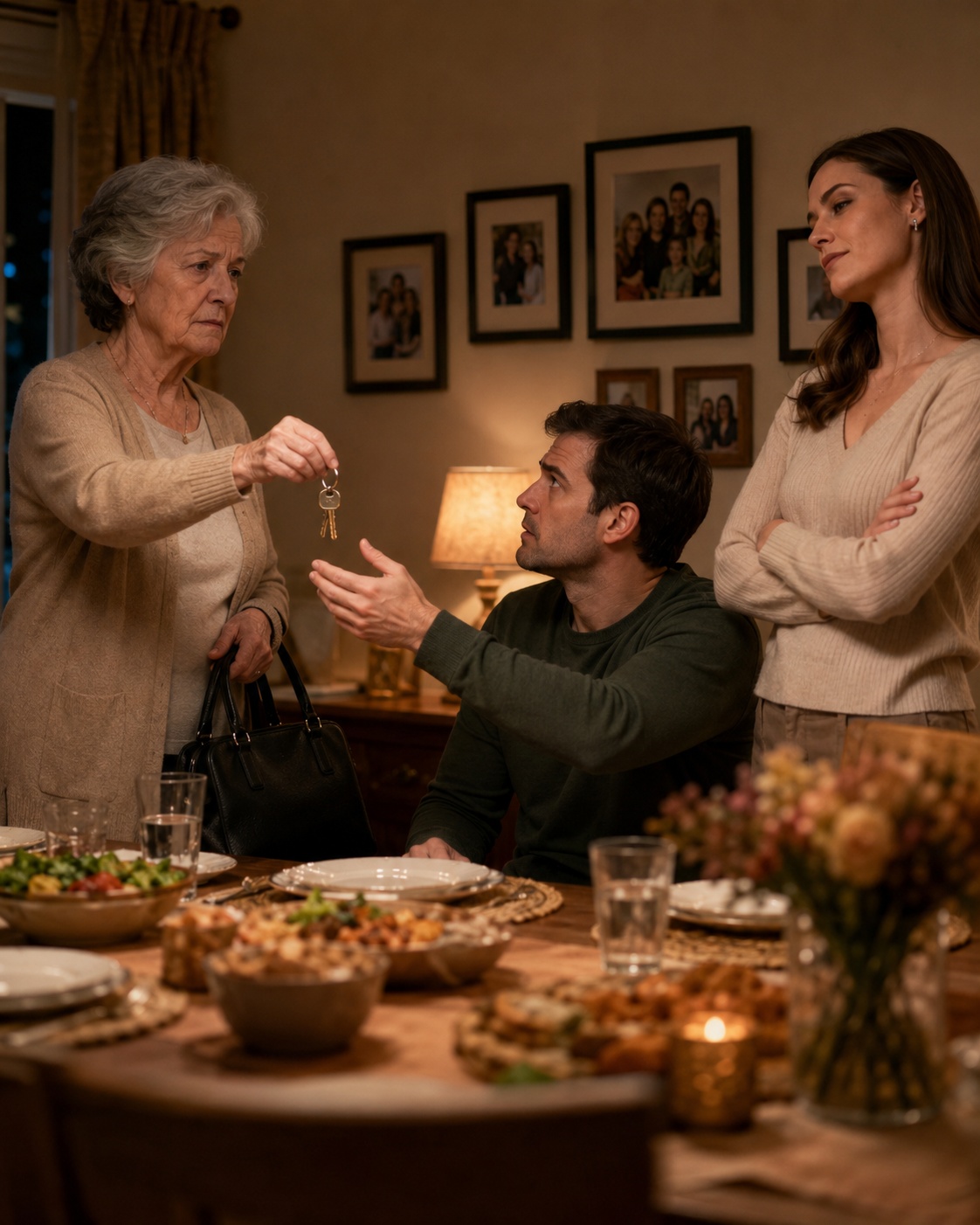
TEIL 1 – Die Nacht, in der ich meinen Sohn verlor „Gib die Schlüssel ab und verschwinde aus diesem Haus. Du bist hier nicht mehr willkommen.“ Ich werde diesen Satz niemals vergessen. Nicht, weil ein Fremder ihn zu mir gesagt hatte. Sondern weil er aus dem Mund meines eigenen Sohnes kam. Matthias saß mir gegenüber … Read more

15 July 2026

Mein Sohn wurde halb tot vor meiner Tür abgelegt. Er flüsterte; ‚Es ist der Vater meiner Frau…‘

TEIL 1: In jener Nacht erwachte der Name Neumann aus seinem langen Schlaf Ich habe die Abendstunden immer geliebt. Wenn die Dämmerung über die Stadt fiel und die grauen Fassaden sich in ein Meer aus Lichtern verwandelten, stand ich häufig an einem der großen Fenster meiner Wohnung und betrachtete die Straßen unter mir. Meine Wohnung … Read more

15 July 2026

She Bought My Coffee Before Knowing I Was The CEO Who Would Change Her Life

I never expected a simple cup of coffee on a cold Toronto morning to reveal the truth about an entire company. My name is Cole Whitaker, CEO of Meridian Capital, and three weeks after acquiring Hartfield Group, I discovered something far more disturbing than a bad financial report. The company looked successful on paper, but … Read more

15 July 2026

Der kleine Junge, der das Herz eines einsamen Millionärs wieder öffnete

Adrian Holz hatte alles, was die Welt bewunderte: unermesslichen Reichtum, ein riesiges Herrenhaus und einen Namen, der in jedem Sitzungssaal Respekt auslöste. Doch jeden Abend saß er allein am Ende eines langen, glänzenden Esstisches und blickte in eine Stille, die schwerer wog als jede Last, die Geld jemals tragen konnte. Einst hatte Adrian jedes Geräusch … Read more

15 July 2026

The Bluetooth Device That Was Watching Her: The Night a Stranger Connected to Her Phone Without Ever Entering Her Home

Emma never believed technology could scare her.

She had always been the person who trusted devices more than people. She used smart locks, security cameras, voice assistants, and every new piece of technology that promised to make life easier. Her phone was always beside her. It held her photos, messages, work, memories, and everything personal about her life.

That was why what happened in 2020 frightened her more than any ordinary break-in.

Because nobody needed to enter her home.

Someone—or something—was already connected.

It started on a quiet evening in Michigan.

Emma was sitting alone in her apartment, watching television after a long day at work. It was around 10:30 PM when her phone made a strange sound.

A Bluetooth connection notification appeared.

At first, she ignored it.

Bluetooth devices appeared sometimes. Speakers, headphones, nearby electronics. It was normal

But then she saw the name.

I CAN SEE YOU.

Emma stopped moving.

She stared at the screen, waiting for the name to disappear.

It didn’t.

She checked her Bluetooth settings. The device was connected.

But she had never paired with it.

She did not own another device.

She did not have smart speakers.

She did not have any reason for a stranger’s Bluetooth connection to appear on her phone.

Her first thought was that someone nearby was playing a joke.

She immediately turned Bluetooth off.

The connection disappeared.

For a moment, she felt relieved.

Then her phone vibrated.

Bluetooth had turned itself back on.

The device was connected again.

I CAN SEE YOU.

Emma’s heart started beating faster.

She walked through the apartment, checking every room.

Kitchen.

Bathroom.

Bedroom.

Closet.

Nothing.

The front door was locked.

The windows were closed.

Nobody was there.

She called a friend and explained what happened. Her friend laughed at first, telling her it was probably just a weird software issue.

“Restart your phone,” she said.

Emma did.

For ten minutes, everything seemed normal.

Then the screen lit up again.

A new Bluetooth device appeared.

The name had changed.

YOU LOOKED EVERYWHERE EXCEPT ONE PLACE.

Emma stopped breathing.

She looked toward the hallway.

The closet door near her bedroom was open.

Only slightly.

But she knew she had closed it.

She slowly walked toward it.

“Hello?” she whispered.

No answer.

She opened the closet completely.

Nothing.

Only clothes, boxes, and darkness.

She laughed nervously, trying to convince herself that she was becoming paranoid.

Then her phone camera opened.

By itself.

The screen showed the closet.

But the camera angle was wrong.

Emma was not holding the phone.

The camera appeared to be facing the room from somewhere near the floor.

Like someone had placed it there.

She dropped the phone.

The camera closed.

For the rest of the night, Emma stayed at a friend’s house.

The next morning, she contacted a technology specialist. He examined the phone and found no obvious malware, no unknown apps, and no record of the Bluetooth device.

“It’s like the connection never existed,” he said.

But Emma knew it had.

She checked her phone gallery before leaving.

That was when she found the photo.

One image.

No timestamp.

No location.

It showed her bedroom.

Taken from the corner near the closet.

Emma was asleep in bed.

The photo had been taken at 3:14 AM.

The problem was simple.

Her phone had been on the table beside her.

Nobody was supposed to have access to it.

The police investigated, but found no evidence of an intruder. There were no fingerprints, no forced entry, and no suspicious activity around the apartment.

Emma moved out two weeks later.

She bought a new phone.

Changed

15 July 2026

Der Mechaniker, der gefeuert wurde und eine ganze Firma veränderte

Hast du schon einmal gesehen, wie jemand alles verliert, wofür er jahrelang gekämpft hat, nur um später zu erkennen, dass er nie wirklich machtlos war? An einem regnerischen Montagmorgen wurde David Berger vor den Augen seiner Kollegen öffentlich entlassen. Sie sahen zu, wie er seinen alten Werkzeugkasten in seinen abgenutzten Pickup legte und die Werkstatt … Read more

14 July 2026