By around March 3, 1836, the men inside the Alamo were no longer simply under siege—they were living through the final countdown. The Alamo was not a purpose-built fortress but a former Spanish mission complex in San Antonio de Bexar, with uneven walls, a church, long barracks, and sections that were never designed to stop a full army. Some stretches were solid stone, while other parts were lower and weaker, creating both strong points and obvious soft spots that everyone inside knew well. Santa Anna’s army had surrounded the mission on February 23, 1836, and the final assault would come before sunrise on March 6.
In the last 72 hours, the roughly 200 defenders—Texians, Tejanos, and volunteers from the United States—were badly outnumbered. Estimates of the Mexican force available for the final attack vary, but it is often placed around 2,000 soldiers, with more in the wider army. The Alamo sat on flat ground, not a hill, which allowed the Mexican army to set up artillery batteries nearby and use the town’s buildings and streets to move men into close position. By this point, the defenders were consumed with practical concerns: powder, cannon shot, and exhaustion.
The Alamo had roughly 21 cannon, including a heavier 18-pounder, but cannons require supplies and crews that a long siege drains quickly. A constant question was whether to keep firing to show strength or save ammunition for the final rush they sensed was coming. Help was the other source of anxiety. Colonel James Fannin, stationed roughly 90 miles away at Goliad, had started toward the Alamo earlier in the siege but turned back, citing supply problems and the difficulty of moving troops over rough terrain.
Inside the walls, the silence from a relief force hit harder than cannon fire. The defenders began to shift from hoping for rescue to calculating how long they could fight without it. A small group of reinforcements had slipped through earlier—famously about 32 men from Gonzales. While it lifted morale briefly, it also carried a darker implication: if 32 men could get in, the enemy would be determined to seal that door for good.
Through hours 60 to 36, the shape of the compound itself became a second enemy. The perimeter was too long for the number of defenders, forcing them to guess where the main attack would land. The weakest section was the north side, where defenses had been hurriedly reinforced with a timber palisade and earthworks. This was no secret to either side.
A force with more men could hit several points at once, and the defenders could not be strong everywhere. They repositioned cannons, checked muskets, and assigned posts, but every choice cost energy they could not afford to lose. James Bowie was sick during the final days, complicating command and morale. William Barret Travis remained the acting commander for many decisions.
The Mexican camp outside continued its routines, but by hours 36 to 24, the signs became harder to ignore. The enemy’s movements looked less like waiting and more like staging. The camp grew quieter, more organized, and more controlled. For the defenders, that calm was terrifying, because it suggested the attack was not a question of if, but when.
Inside the Alamo, the understanding began to settle in that rescue likely was not coming. The distances were simply too great—Gonzales roughly 70 miles away and Goliad roughly 90—and any relief force would have to fight its way through Santa Anna’s ring just to reach the walls. The defenders began talking less about winning and more about delay: holding to buy time for the wider Texas forces, pulling Mexican troops into this fight, and making the enemy pay a real price. On the night of March 5, the rules of the siege flipped.
Darkness and the town’s buildings helped the attackers close distance unseen. The defenders had to guard a wide perimeter with exhausted men. A large army can rotate its troops; a small garrison cannot. Sleep became a double-edged sword—keeping men awake led to mistakes, and letting them sleep risked being caught off guard.
As the night deepened, the camp’s usual noise faded. That unnatural quiet was not a sign of rest. It meant the enemy was being organized for an assault. Before dawn on March 6, Mexican troops formed into attack groups and advanced from multiple directions at once.
A lookout saw shapes moving in organized blocks, and the alarm went up. The defenders fired cannons loaded with scrap and small shot, essentially turning them into giant shotguns. The first wave of attackers dropped, but the survivors kept coming. Ladders went up, and the weak points finally mattered.
The north side’s hurried defenses became the place where numbers did the most damage. Once the attackers gained a foothold, the battle shifted from holding the walls to surviving inside the compound. William Barret Travis was killed early in the fighting near the defenses. James Bowie, sick in his final hours, was killed in the compound as the attackers flooded in.
The fight became a scattered last stand, moving from the courtyard into the long barracks and the church, where heavy masonry offered some protection but could not fix the central problem: the enemy was now inside. Accounts of Davy Crockett’s death differ. Some place him fighting to the end, while others suggest he may have been captured and then executed. The eyewitness record is uneven, and the debate remains unresolved.
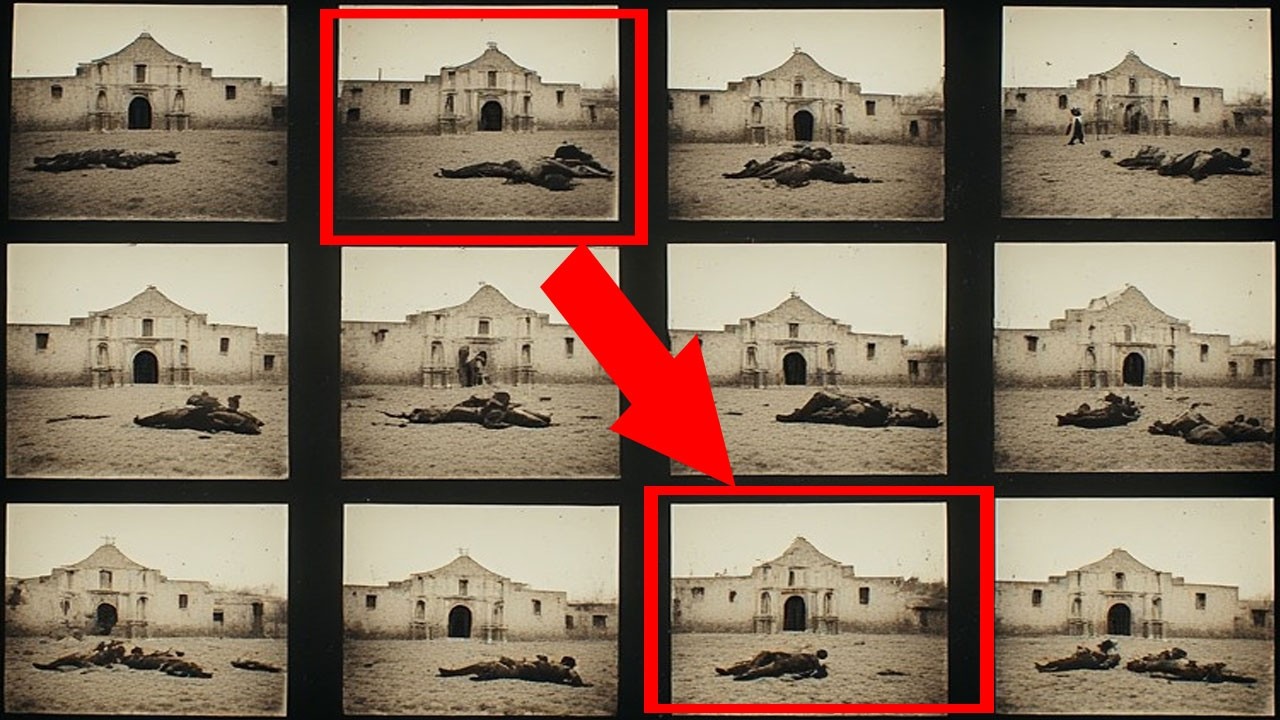
What is not debated is that the organized defense collapsed within a short time. The fight is often described as lasting under two hours, a speed that fits the situation: an exhausted small garrison defending an imperfect fort against a coordinated storming attack in the dark. When the shooting stopped, nearly all defenders were dead. Non-combatants, including women, children, and enslaved people, were spared.
Susanna Dickinson was famously sent away to spread word of what had happened, which served Santa Anna’s purpose of spreading fear across Texas. Mexican losses were also heavy, with accounts describing hundreds killed and wounded. The Alamo was not a free victory. The bodies of the dead were gathered and burned, partly out of necessity and partly as a statement.
The exact moment the defenders realized the final 72 hours had begun was not tied to a single speech or cannon shot. It was the point when the siege stopped feeling like steady pressure and started looking like preparation, when the enemy’s routines changed, staging began, and the defenders’ planning shifted from holding until rescue to holding because rescue might never come. The final proof arrived during the last night’s unnatural quiet, and then in the organized movement before dawn, when shapes in the dark turned into columns and the assault began. The Alamo did not win the battle, but the fight shaped what came next.
Shortly afterward, “Remember the Alamo” became a rallying cry as the Texas Revolution continued.