On the morning of November 10, 2015, what began as an ordinary day in Indianapolis turned into a nightmare that would shock the nation.
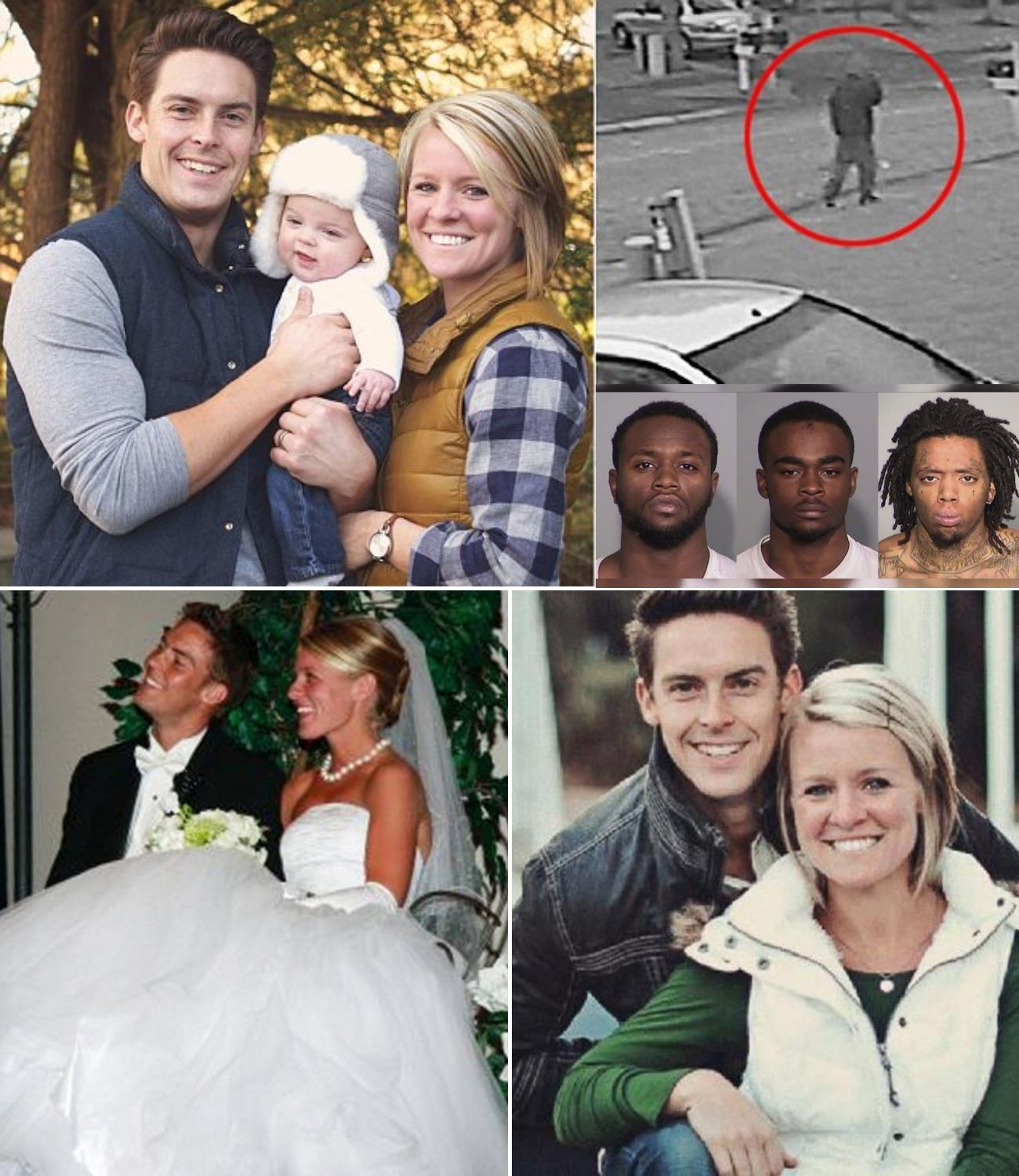
Amanda Blackburn, a 28-year-old pregnant mother and wife of pastor David Blackburn, was alone at home while her husband was at the gym and their young son was at daycare. By all appearances, the Blackburn family represented a picture of stability and faith. Few could have imagined that within hours, their lives would be shattered forever.
When David Blackburn returned home, he discovered a horrifying scene. Amanda had been shot inside the family’s residence during what investigators would later determine was a violent home invasion. Emergency responders rushed her to the hospital, where doctors fought desperately to save both Amanda and her unborn child.
Despite their efforts, Amanda died from her injuries. Her unborn baby, delivered prematurely in a last attempt to save his life, survived only a short time before passing away as well.
The tragedy immediately captured national attention.
As investigators began examining the crime scene, numerous questions emerged. Was Amanda specifically targeted? Did someone know she would be home alone? Could the attack have been connected to the family’s public role in the community?
The early days of the investigation were filled with uncertainty.
Authorities quickly looked into all possible leads, including those closest to the victim. David Blackburn’s whereabouts during the attack became an important part of the investigation. Detectives reviewed surveillance footage from the gym and examined available evidence. Ultimately, investigators found no evidence linking him to the crime, and he was publicly cleared.
Attention then shifted toward a series of burglaries occurring throughout the area.
According to investigators, three men had been traveling through neighborhoods looking for opportunities to break into homes. The suspects were later identified as Larry Taylor, Jayen Watson, and Diano Gordon.
The investigation revealed that the group had allegedly targeted houses that appeared empty. On the day of the attack, they entered the Blackburn residence believing no one was inside.
 That assumption proved catastrophically wrong.
Amanda was home.
According to prosecutors, when Amanda encountered one of the intruders, she resisted. During the confrontation, Larry Taylor shot her multiple times before fleeing the scene with the other suspects.
The case might have remained unsolved much longer if not for advances in modern forensic science.
Investigators pieced together evidence from multiple sources, including DNA recovered during the investigation, surveillance footage, witness accounts, and a stolen vehicle connected to the suspects. Each piece helped build a clearer picture of what happened that morning.
Eventually, detectives identified the three men and made arrests.
As the case moved through the court system, prosecutors argued that the evidence overwhelmingly connected the suspects to the crime. Faced with the strength of the case, some defendants cooperated with authorities and provided testimony regarding the events surrounding the burglary.
Larry Taylor, identified as the gunman, received a lengthy prison sentence. The other participants received reduced sentences after agreeing to testify and assist prosecutors.
For many observers, the convictions brought a measure of justice.
Yet the story did not entirely fade from public discussion.
Years after the murders, online debates and social media discussions continued focusing on events that occurred after Amanda’s death. Some observers questioned David Blackburn’s decision to remarry relatively quickly and noted that he received life insurance benefits following Amanda’s death.
Those facts became the subject of speculation across internet forums and true-crime communities.
However, despite years of public scrutiny, law enforcement officials never identified David Blackburn as a suspect. Investigators consistently maintained that the evidence pointed to a random burglary committed by the convicted offenders.
The distinction remains important.
Public curiosity and speculation often survive long after criminal cases are resolved, especially when a tragedy involves a young family, a prominent community figure, and unanswered emotional questions. Yet speculation alone is not evidence, and the official findings of the investigation remain unchanged.
Today, the Amanda Blackburn case is remembered not only because of its heartbreaking loss but also because of the lessons it offers about crime, forensic science, and vulnerability.
Investigators have frequently pointed to the case as an example of how modern technology can help solve violent crimes. DNA analysis, digital surveillance, and traditional detective work combined to identify the perpetrators and secure convictions.
At the same time, the tragedy serves as a reminder of how quickly ordinary lives can be altered by random acts of violence.
A young mother lost her life. An unborn child never had the chance to grow up. A family was forever changed.
More than a decade later, the case continues to resonate with those who followed it—not because the mystery remains unsolved, but because the human cost remains impossible to forget.
For many, Amanda Blackburn’s story stands as a powerful reminder that behind every headline, every courtroom proceeding, and every forensic breakthrough lies a family whose lives will never be the same again.